Men's Cotton Shirts


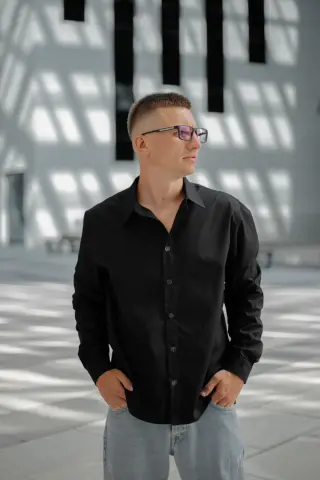
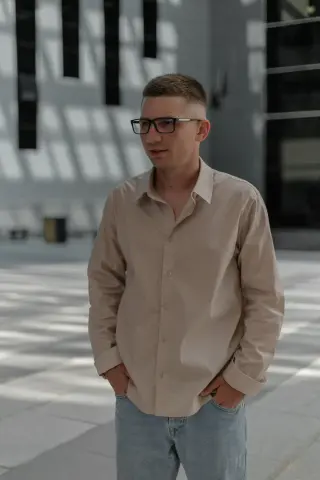








Men's cotton shirt: what the fabric gives and what not to expect
A men's cotton shirt is valued because your body does not overheat in it: the fabric lets air through, absorbs moisture and feels pleasant on the skin even on a long day. The trade-off is creases and more careful upkeep. Once you know the strengths and weaknesses of the material, it is easy to pick a shirt for your day. Compare cotton with other fabrics among all men's shirts.
Why cotton beats synthetics
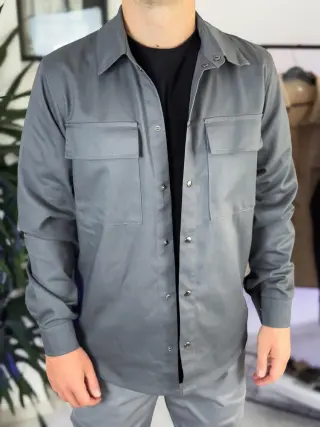
Cotton does not stick to your back, does not build up static and does not hold odor as stubbornly as polyester. That makes it comfortable for a whole working day, a ride on public transport or a heated room. In hot weather it absorbs moisture rather than leaving it on the skin, although wet patches on the back can still show, especially on gray.
What cotton cannot do
Pure cotton creases: after a car journey, marks stay on the back and under the elbows. When wet it gets heavier, feels cold and takes a long time to dry, so people choose other fabrics for rain or hiking. Hot water and a tumble dryer can shrink it. It does not protect from wind and cold by itself, so in the transitional seasons you need a jacket on top or a heavier fabric.
Pure cotton or a blend
The composition on the label explains almost everything. A shirt of 100% cotton breathes best but also creases more. A fabric of 97% cotton feels almost the same as pure cotton. A blend of 60% cotton, 37% polyester and 3% elastane creases less and stretches slightly at the shoulders, so it is handy for work or travel, although in the heat it falls behind pure cotton.
Thin, heavy or brushed
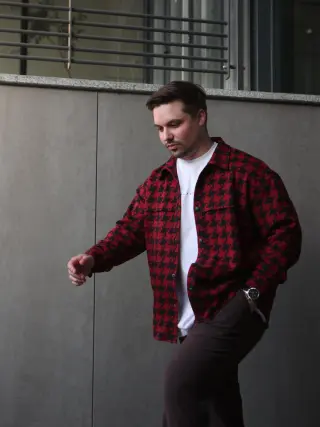
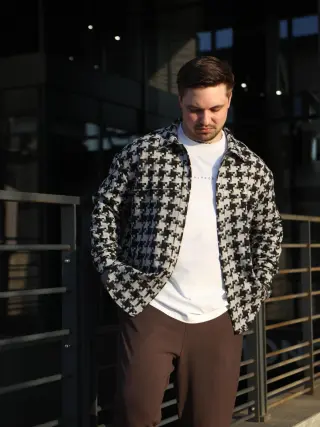
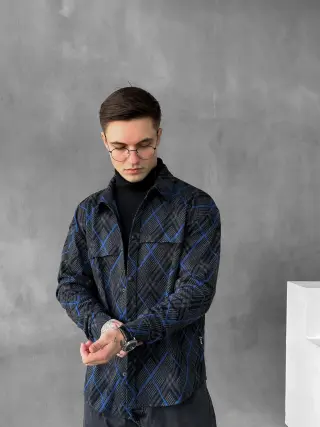
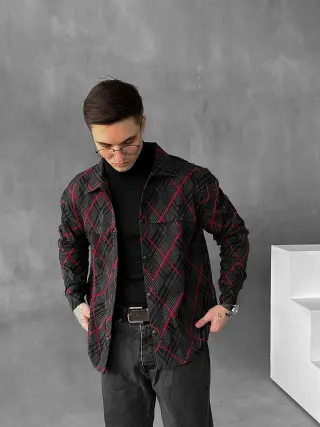
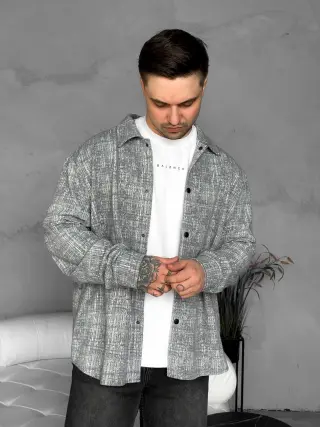
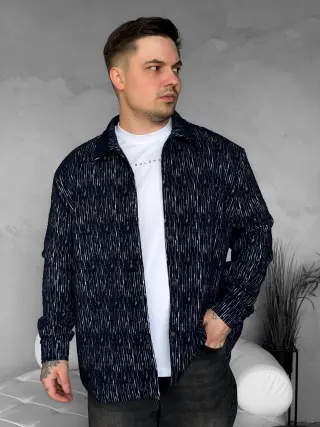
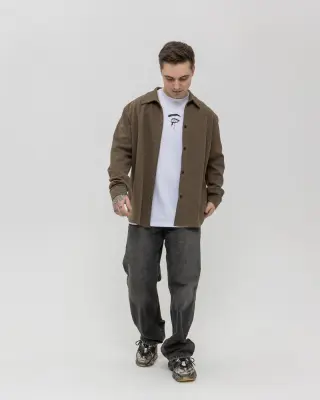
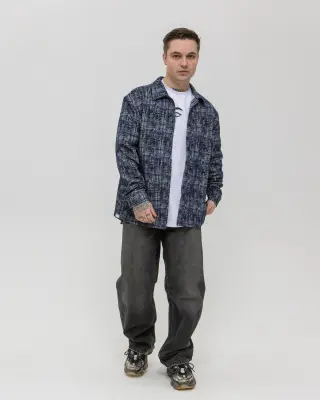
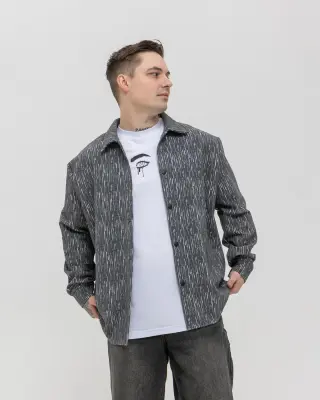
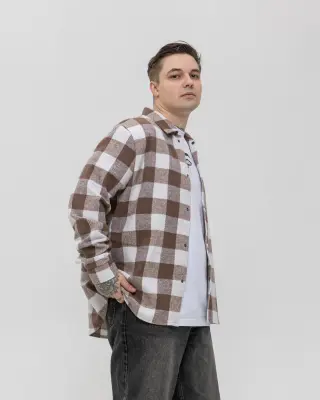
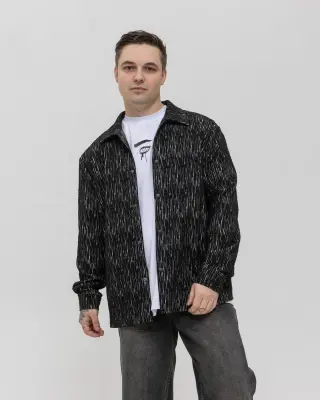
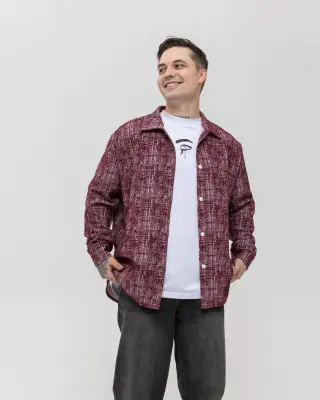
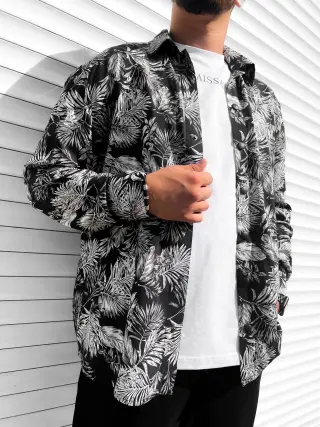
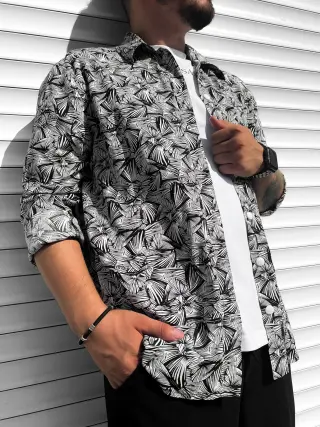
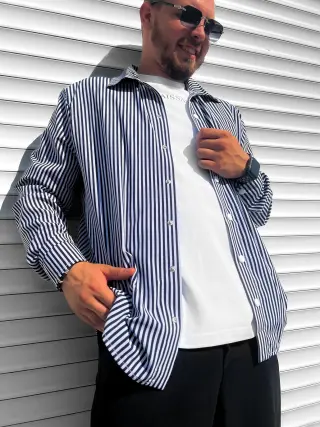
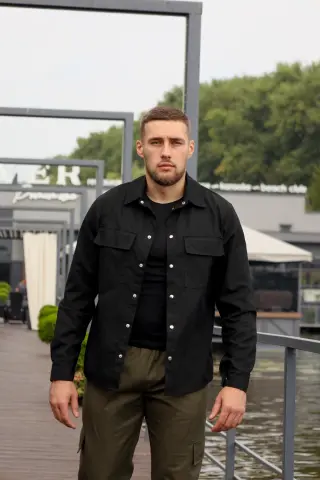
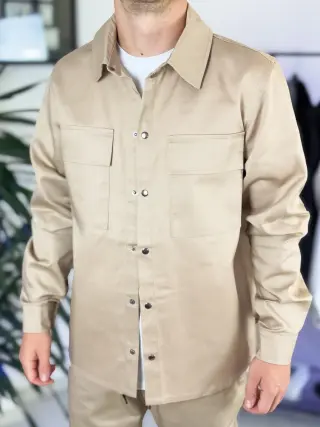
The word "cotton" does not tell you how warm a shirt is. Thin smooth fabric suits spring and warm evenings. Heavy fabric holds its shape and shows fewer creases, so it looks good worn open over a T-shirt. Cotton with a brushed texture feels like flannel and is noticeably warmer: it is used, for example, for oversized shirts for the cool season. Before buying, read in the description which fabric it is.
For work, the weekend and travel
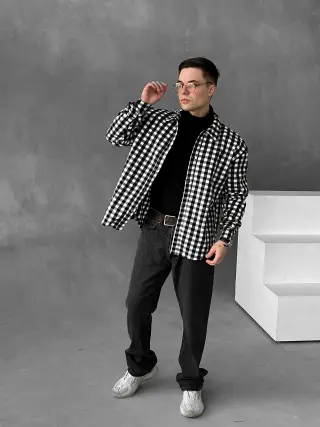
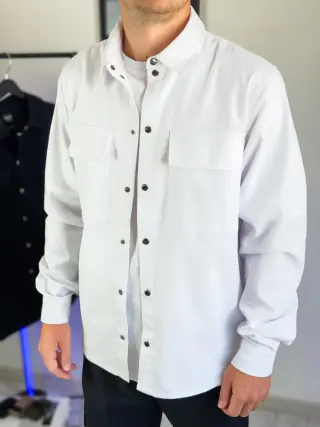
For work, choose a smooth white shirt or another plain model: buttoned and tucked in, it looks strict. A blend with elastane creases less over a long day at a desk. For the weekend, cotton works well with a pattern: a checked shirt hides small creases and does not need careful ironing. For travel, take a heavier fabric or a blend, because thin pure cotton comes out of a bag creased.
Washing, drying and ironing
Wash inside out in cool water with similar colors: the fabric keeps its color longer and shrinks less. It is best to avoid the dryer. Right after washing, smooth the shirt with your hands and hang it up with the top button fastened: the collar dries straight and you will iron less. Pure cotton handles a hot iron, while a blend with polyester or elastane needs a lower temperature. Iron dark shirts inside out so the fabric does not get a shine.
Frequently asked questions
How can I check whether a fabric creases?
Squeeze the edge of the shirt in your fist for a few seconds. Pure cotton leaves clear creases, while a blend with polyester smooths out faster.
Can I wear a cotton shirt without a T-shirt?
Yes, cotton is pleasant on the body and absorbs moisture. Just keep in mind that thin light fabric can be see-through.
Should I size up in case of shrinkage?
If you avoid hot water and tumble drying, no. Take your own size: a shirt that is too big will not shrink enough to sit properly.