Women's Neck Gaiters








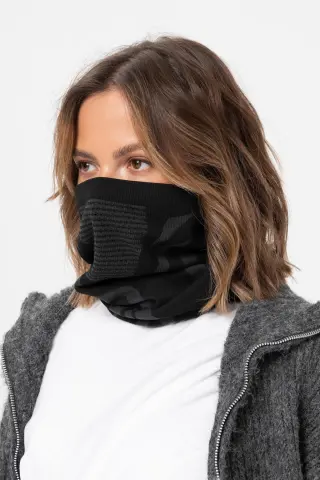






Women's Neck Gaiter: How to Choose One Instead of a Scarf
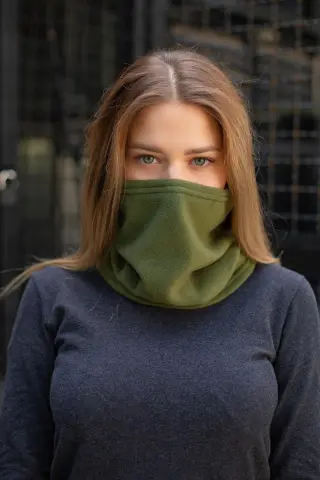
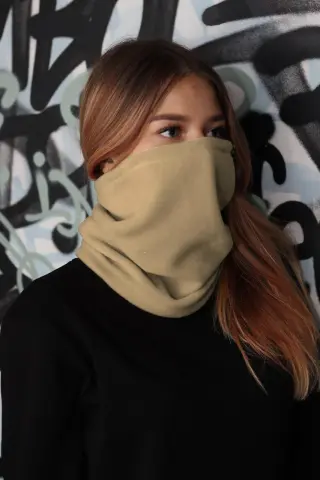
A women's neck gaiter is a closed ring of soft fabric that you pull on over your head. It covers the neck, and when the wind picks up, it is easy to lift over the chin or nose. A scarf needs retying and tucking under a jacket, while a gaiter stays in place and does not unwrap as you walk. If you are still unsure about the type, compare all gaiters, balaclavas and bandanas.
Think About the Weather First
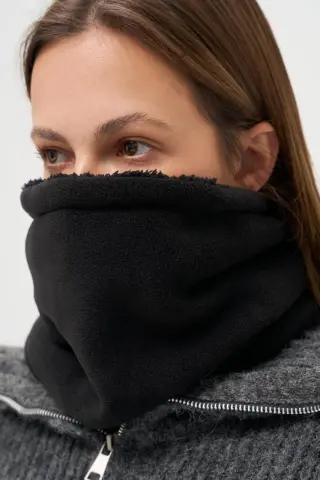
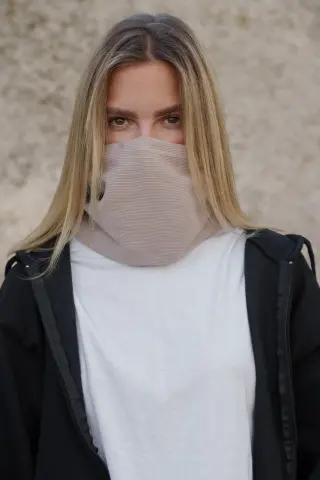
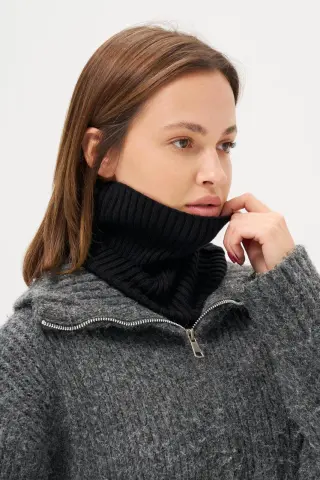
Choose the fabric by how long you will be outdoors and how actively you will move. For a short trip to work, a thin ribbed knit is enough: it adds no bulk under a coat. For a long wait in frost, take a fleece gaiter, and in the hardest cold, fleece with fur inside helps. On a slope or during a run the neck sweats quickly, so a thermal gaiter in micro-scuba works well there, especially one with ventilation channels that let you breathe freely and keep the warmth in. If you also need to cover your head, look at a balaclava.
How a Gaiter Should Fit
A good gaiter goes over the head without effort but does not sag on the neck. If the edge sits loose, cold air gets under the fabric, and in the wind the gaiter slips off the nose. An elastic with a toggle solves this: it adjusts the width, so you can fit the piece to yourself. Pay attention to height as well. A low gaiter covers only the neck, and reaching the nose takes spare fabric, so measure from your collarbones to the bridge of your nose and check it against the model's parameters.
How to Wear It with Outerwear
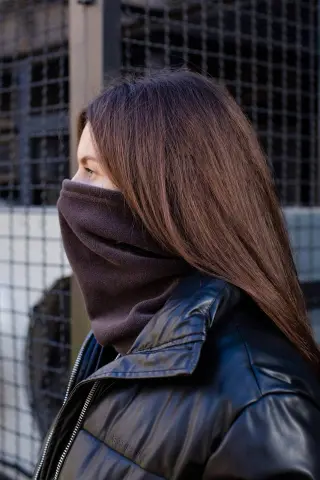
Under a jacket, the gaiter goes on first and its lower edge tucks under the collar, so cold cannot reach the throat. With a coat it replaces a scarf and takes less room in a bag. A fur snood-style gaiter can stay on top of your clothes: it falls in soft folds and becomes part of the look. With a sporty jacket, a smooth option without extra bulk is easier, as it does not limit turning your head. Put your hat on after the gaiter, so its edge lies over the fabric and wind stays away from your ears.
What to Avoid
The most common mistake is taking a dense gaiter where you will move a lot. Your neck sweats, the fabric gets damp, and at the first stop you feel colder than you would in a thinner one. The second mistake is keeping it on your nose all the time. Breath dampens the fabric, and in frost that moisture chills the face, so lower the edge when the wind drops. The third is wearing a scarf, a gaiter and a high collar together. Your neck barely turns, and you gain little warmth.
Color and Care
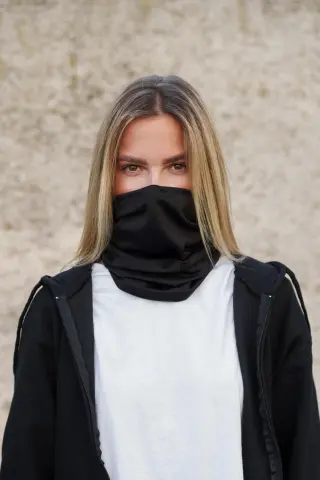
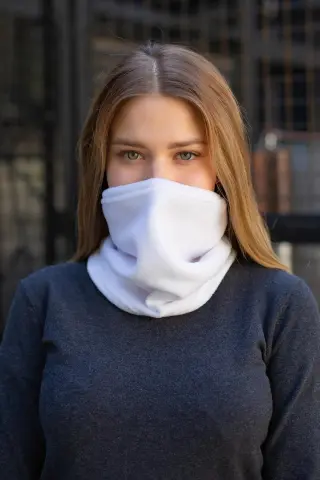
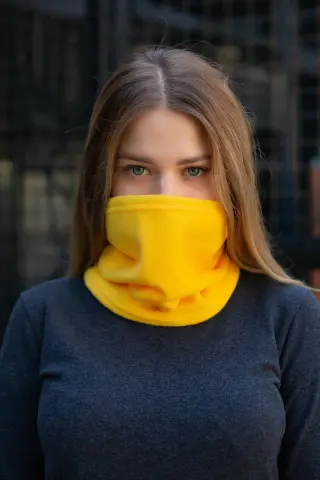
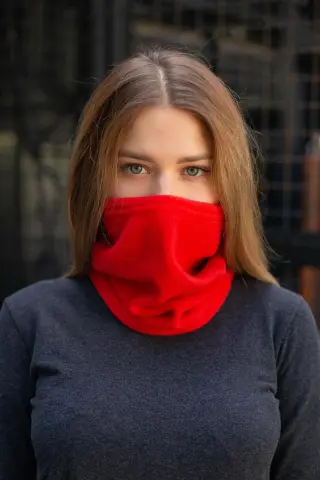
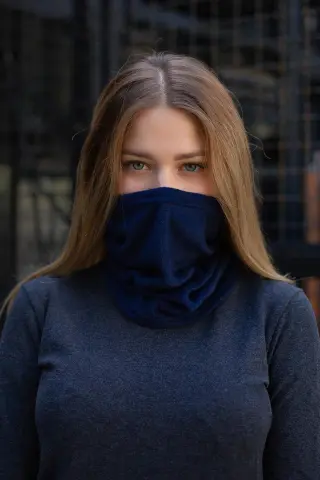
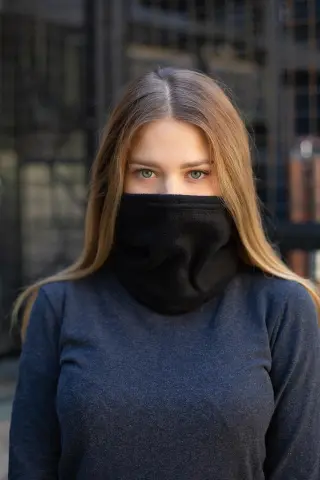
Color shows most near the face. Black goes with any jacket, white or beige freshen dark outerwear, and yellow or red becomes the one bright detail of a solid outfit. Wash a gaiter at up to 30°C without spinning or bleach, and hang it to dry without a tumble dryer. Pile fabrics are better washed apart from items with zippers and hook-and-loop fasteners, so the pile does not snag.
Frequently Asked Questions
Can a gaiter replace a scarf in frost?
It can, if the fabric is warm and the lower edge is tucked under the collar. In hard cold, lift the upper edge over your chin.
Is a gaiter useful in spring?
Yes, on cool windy days and on a bike. For spring, take a thinner ribbed knit that fits easily in a pocket.
How many gaiters do you need for a season?
Two is handy: a thin one for every day and a warm one for frost or a mountain trip. That way one is always dry while the other is in the wash.