Men's Basic Oversized T-Shirts with No Print
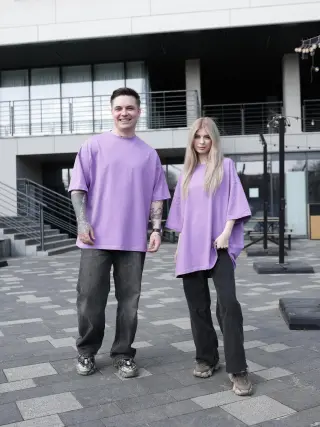


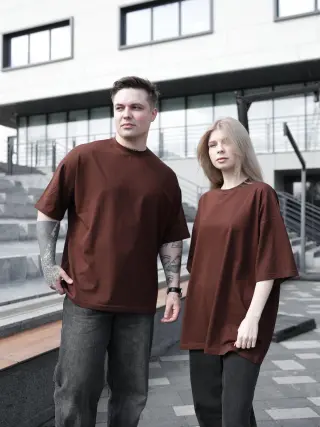
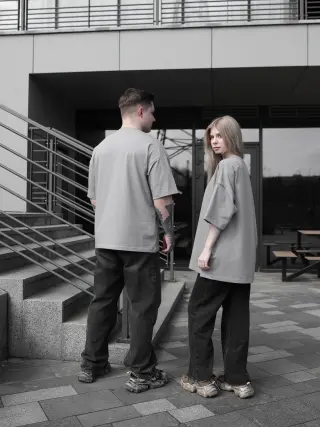
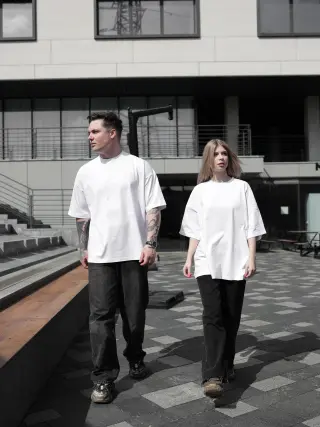

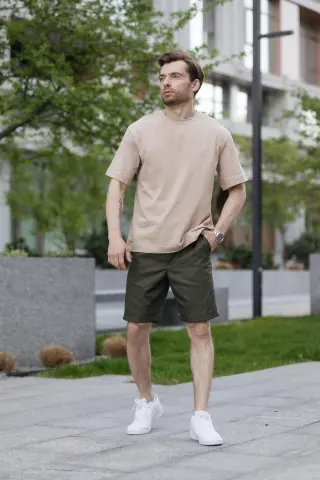
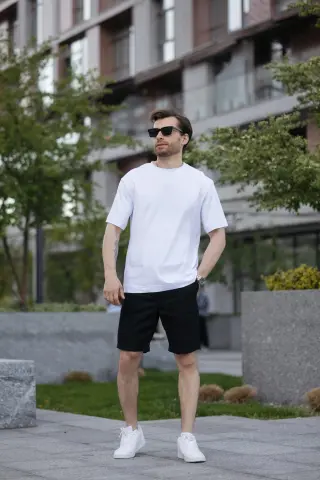
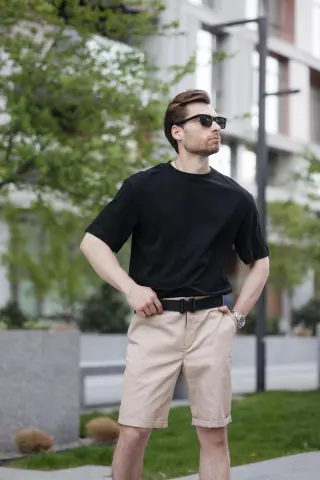
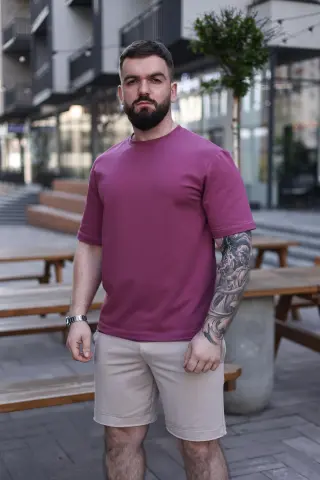










Men's Basic Oversized T-Shirt: What Makes It Look Good with No Print
A men's basic oversized T-shirt hides nothing: there is no design to distract from the fabric, seams and neckline. That is why two plain T-shirts can look completely different, one like a considered piece and the other like something for home. Below is what to check, which colors to buy first and how many you really need. General advice on cut and size is on the page for all oversized T-shirts.
What to Check in a Plain T-Shirt
Start with the fabric. Dense Turkish single jersey in 100% cotton is not see-through and holds its volume, so the shoulders and hem stay even with no decoration at all. Regular single jersey is softer and feels nice on the skin. Cotton with a little elastane helps keep the shape after washing. Then look at the neckline: a round neck should lie flat, not ripple, and not press on your neck. Check the hem and shoulder seam, since on plain fabric any unevenness shows at once because the eye has nothing else to catch on.
Which Colors to Buy First
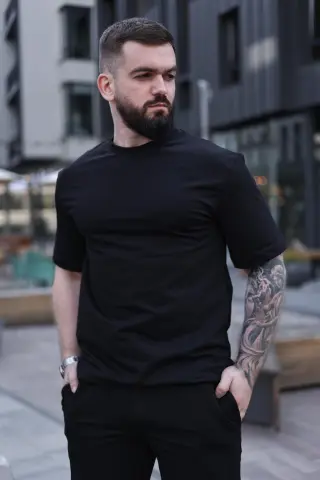
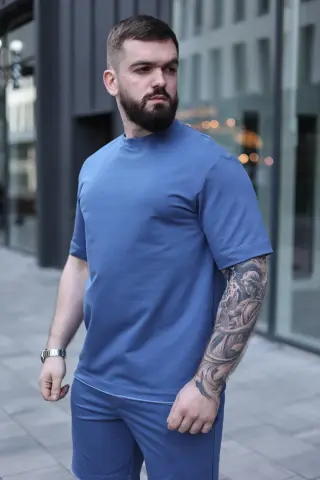
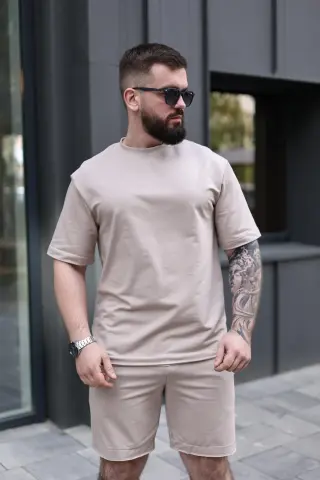
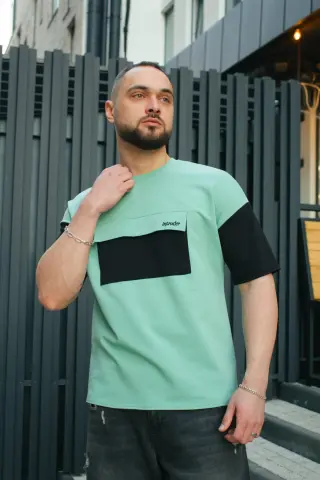
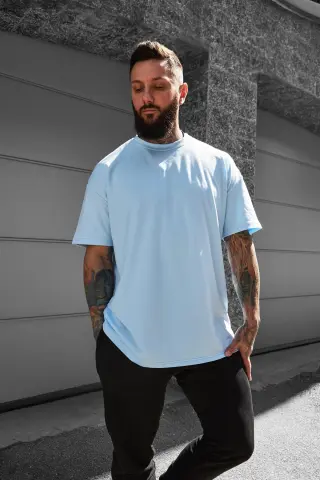
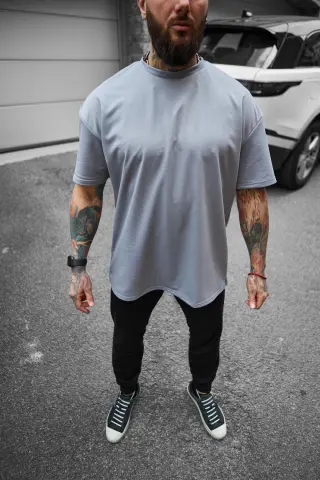
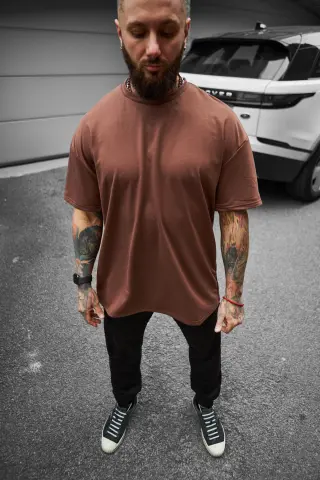
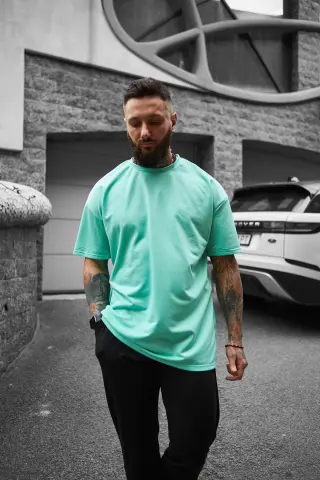
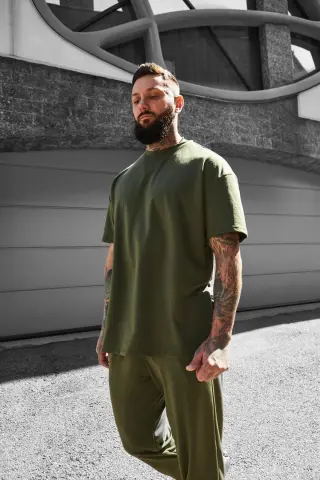
Start with a pair that goes with almost everything: a black T-shirt for every day and a white T-shirt for hot weather and jeans. A gray T-shirt in graphite or a light shade makes a good third: it is softer than black and less fussy than white. Once you have the base, add color: a green T-shirt in khaki or mint, beige, brown or violet. These shades make a basic piece more noticeable, yet it is still easy to pair.
Details Instead of a Design
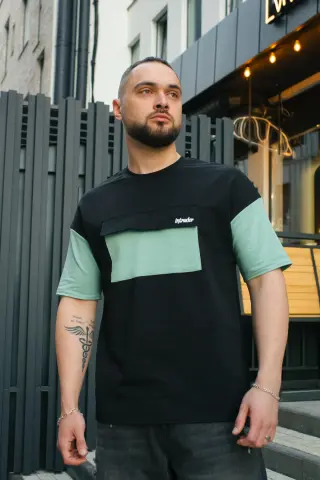
A plain T-shirt does not have to look boring. Contrast seams emphasize the cut, so a black one with white seams or a white one with black seams resembles a design with no ink at all. Contrast panels on the chest and sleeves divide the body into sections and remove the feeling of a solid surface. Longer sleeves add street character to the silhouette. When choosing this kind of model, treat the detail as the main thing and keep the rest of the outfit calm, as a second contrast nearby is too much.
A Base for Layers
A plain T-shirt works best under something: beneath an open shirt, light jacket or vest it creates a calm strip down the middle, and the outer layer looks more expressive. It is simplest when the T-shirt hem is slightly longer than the outer piece or level with it, as a much longer one looks accidental. If you want two pieces at once, a set of two T-shirts in black and white with the same cut is handy.
Why Basic T-Shirts Wear Out First
They get worn most often, so they go through the wash more often. The first sign of wear is a neckline losing its shape, so do not pull on it when you take the T-shirt off. Wash inside out in cool water with similar colors, and drying on a hanger is fine. Store jersey folded on a shelf, because narrow hangers in a closet stretch out the shoulders over time. When a T-shirt has lost its looks, do not throw it out right away: it can still do for home, but get a new one for going out.
Frequently Asked Questions
How many basic T-shirts do you need for a week?
Three or four are usually enough if you wash every few days. The fewer you have, the more often they get washed and the faster they wear out.
Can you wear a basic oversized T-shirt under a blazer?
It is tricky: wide sleeves bunch up inside a narrow blazer sleeve. A loose blazer or an untucked shirt works better, since a roomy top sits naturally under them.