Men's Plus-Size Oversized T-Shirts
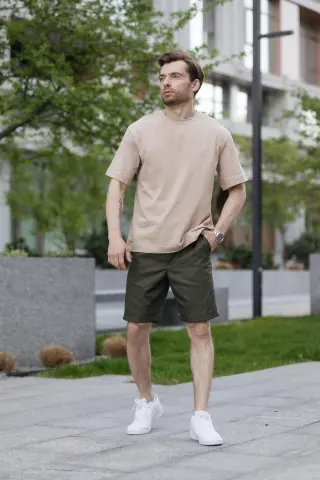
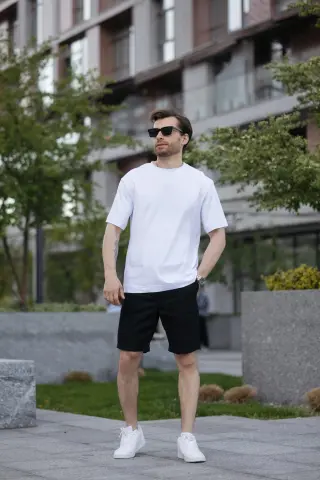
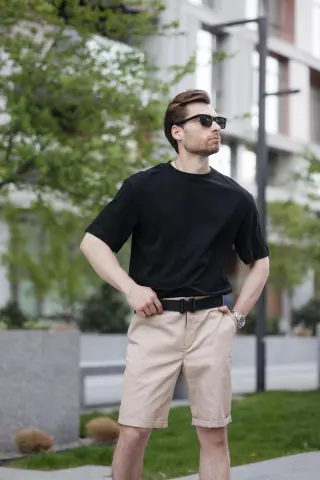
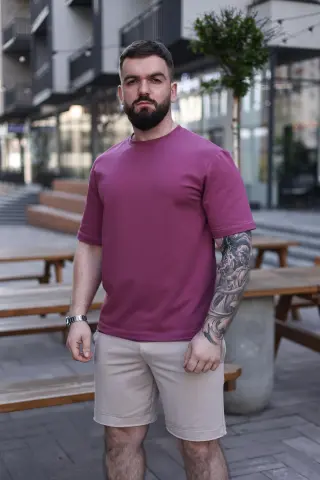
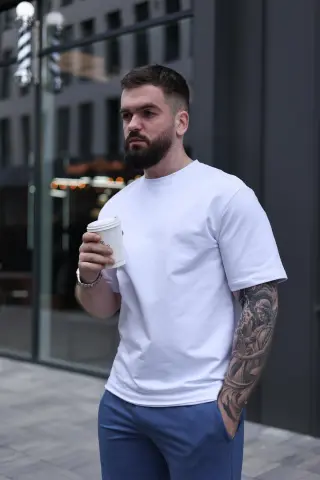
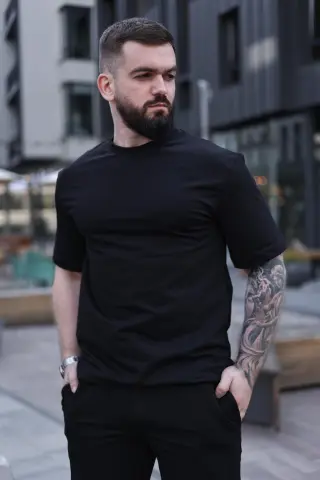
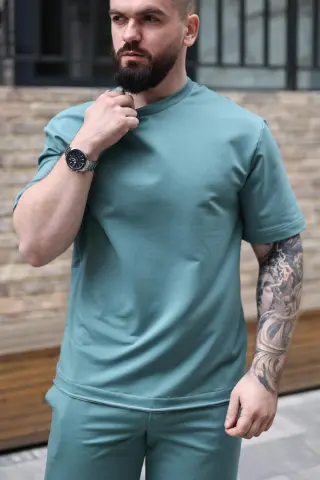
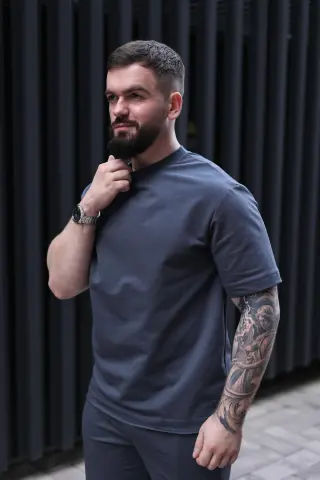
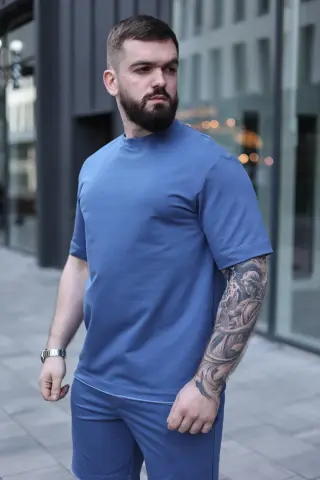
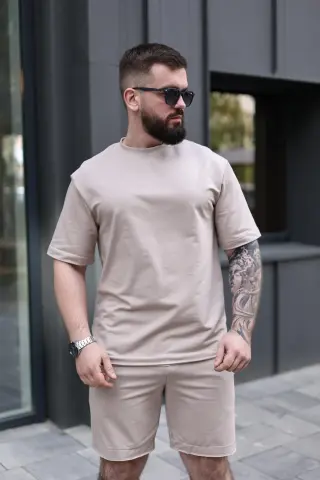
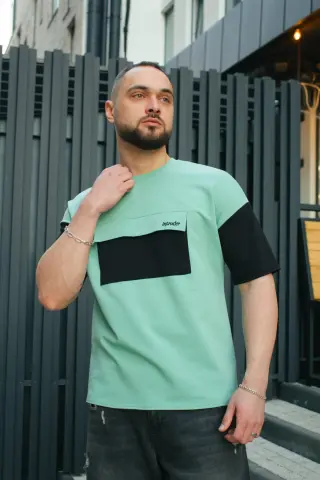
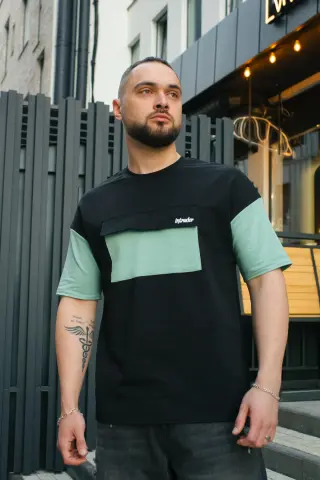
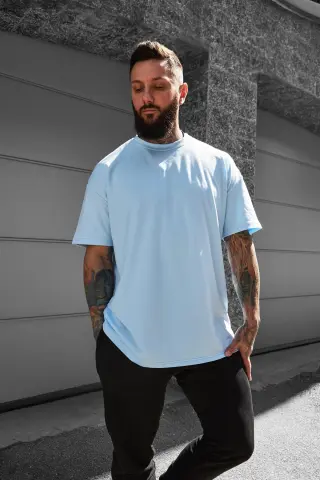
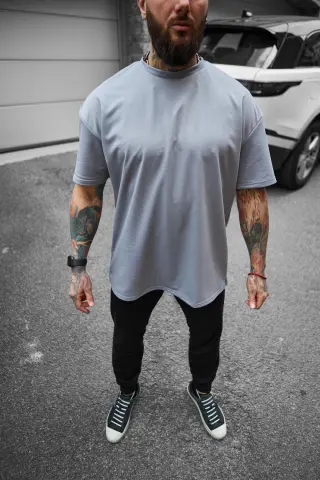
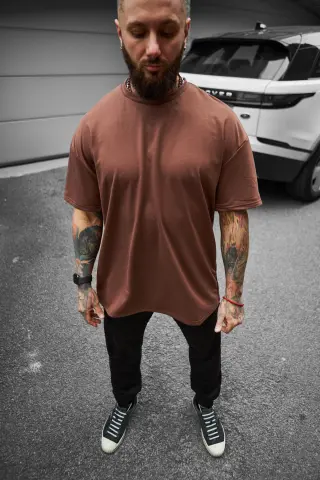
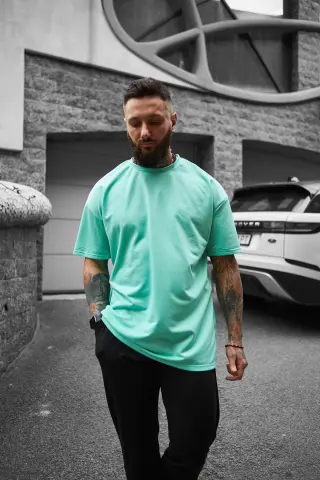
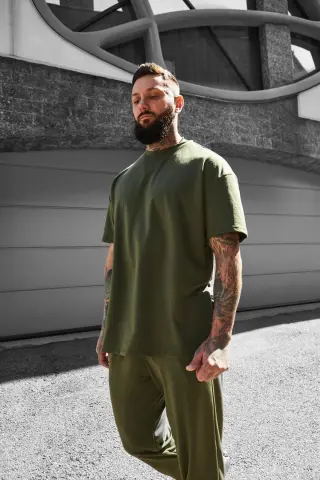
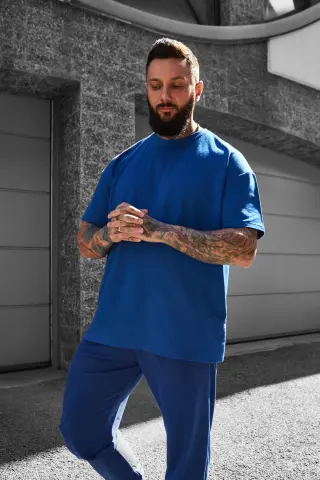
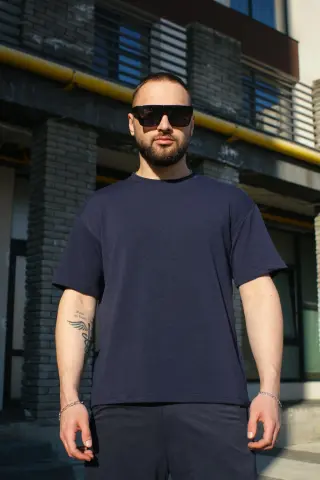
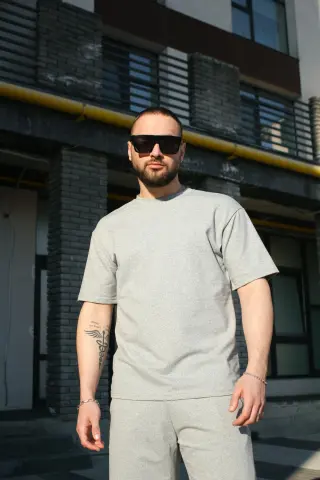
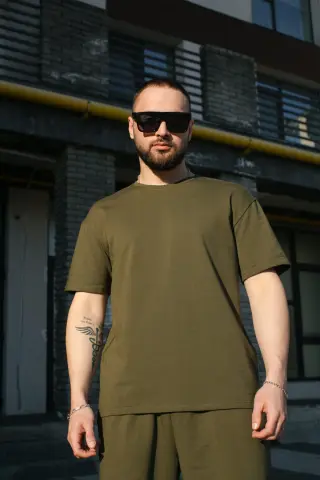
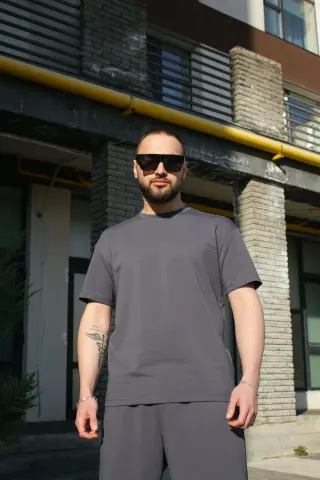
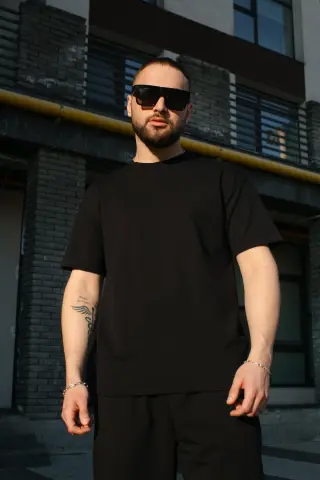
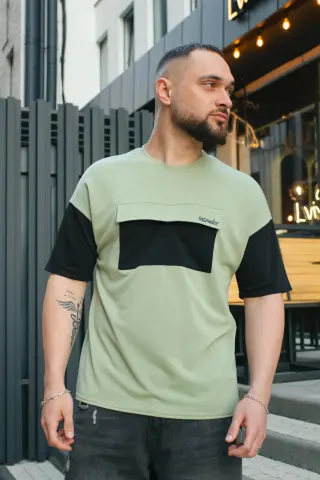
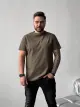

Men's Plus-Size Oversized T-Shirt: How to Choose by Measurements
A men's plus-size oversized T-shirt has to do two things at once: leave room for the stomach and shoulders and not turn the figure into a rectangle. Simply taking a regular T-shirt in a larger size does not solve this, because the length and neckline grow too much along with the width. So the letters on the label matter less than your measurements and the model's dimensions. General advice is on the page for all oversized T-shirts, and below is how to choose well for a large build.
Which Measurements to Take Before Buying
Lay a T-shirt you find comfortable on a table and measure the width under the arms, the length from shoulder to hem and the sleeve length. Twice the width under the arms gives the T-shirt's circumference, which should be bigger than your own at the widest point, whether chest or stomach. An oversized model needs more room than a classic one, because the loose body is not meant to sit against you. Once you have the numbers, compare them with the model's dimensions. If you are torn between two options, go by the stomach and shoulders rather than the length.
What Dual Sizes Mean
S/M, L/XL or XXL/3XL mean that one model is made for two neighboring sizes. A loose cut allows this: if you wear the smaller of the two, the T-shirt fits more loosely, and if the larger, closer to the body. If you are already at the top of the label, there may not be much room, so compare the width with your own T-shirt. A regular scale up to 4XL is more precise: each size stands alone, and it is easier to pick exactly the circumference you need.
Shoulders, Stomach and Length
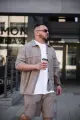
On wide shoulders a dropped seam falls less than on narrow ones, and that is normal: it still sits below the shoulder joint. The stomach lifts the hem, so a T-shirt is always shorter in front than in back. In the mirror, look from the front: the edge should cover your waistband and stay even, or the outfit looks unfinished. A wide sleeve does not press on the shoulder and arm, and a longer one covers the upper arm, which is handy if you prefer not to show it.
Pants, Shoes and Print
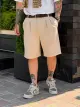
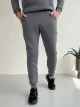
A wide top needs support from below. Straight or loose pants balance the silhouette, while skinny ones make the legs look thin under a big body. In summer go for knee-length shorts and choose shoes with a noticeable sole. A black T-shirt visually reduces volume, though dark gray works just as well. A basic T-shirt with no print looks better on the stomach, with no design to draw the eye there. If you want a printed T-shirt, choose a compact chest design, since a big one looks even wider on a wide body.
Fabric in Hot Weather
In the heat, a large build needs fabric that absorbs moisture and does not stick. All cotton is a good choice here: it feels nice and breathes, and a loose cut leaves air next to the body. A little elastane in the mix helps hold the shape, especially at the neckline. There is less chafing under the arms where the sleeve is wide and the seam sits lower. Wash the T-shirt in cool water to protect the length and width you looked at so carefully when choosing.
Frequently Asked Questions
Should you go one size up?
If the measurements match, no. An extra size adds length and makes the sleeves longer, and you end up looking bigger rather than slimmer.
Does an oversized cut hide the stomach?
Yes, if the fabric is dense and does not cling. Thin fabric sits on the stomach and shows its shape even with a loose cut.
What should a tall man look for?
Look first at the length from shoulder to hem. If the width is right but the length is short, the edge rides up with every move, so a longer model is a better choice.