Before washing: care label, pockets, zippers
Before loading the jacket into the drum, find the label on the inner seam. It will tell you whether the garment can be machine washed at all. Here is what to look for:
- A wash tub with a number: the maximum water temperature, most often 30 or 40 °C. A tub with a hand means hand wash only, and a crossed-out tub means no water washing.
- A square with a circle inside: machine drying. If it is crossed out, dry the jacket naturally only.
- Bars under the tub: the more bars, the gentler the cycle and the lower the spin speed should be.
The same label states the type of filling. Wording such as "down/feather" with a ratio like 80/20 or 90/10 means natural down. "Polyester", "synthetic wadding" and "hollofiber" point to synthetics. If the label has been cut off, feel the garment: natural down bunches into soft lumps, feather quills sometimes poke through the fabric, while synthetic insulation lies in an even, springy layer. The filling type determines your choice of detergent and drying method, more on that below.
Now prepare the jacket itself. The order is the same for women's and men's models:
- Empty all pockets, including the inner ones. A forgotten coin or key can tear the fabric or damage the drum.
- Unfasten the fur trim and the detachable hood. Natural fur should not go in the machine.
- Close zippers, snaps and hook-and-loop fasteners so they don't snag the fabric.
- Turn the jacket inside out: this way the outer fabric rubs less and keeps its color.
- Treat stains on the cuffs, collar and around the pockets. Apply a little liquid detergent to the stain, rub gently with a soft brush and leave for 10–15 minutes.
These steps are equally necessary whether it's women's winter jackets with down or men's winter jackets with synthetic insulation.
Cycle, temperature, detergent and tennis balls
If your washing machine has a "Down" or "Down jackets" program, choose it. No such program? A "Delicates", "Wool" or "Hand wash" cycle will do. On these cycles the drum turns slowly, so the down is less likely to shift into the corners of the baffles.
Use cool water, within the temperature shown on the label. Usually 30 °C is enough: hotter water won't clean the jacket better, and cool water is safer for both the fabric and the filling. Set the spin to the minimum. A strong spin presses wet down against the drum walls, and it clumps into dense lumps that are hard to break up afterwards.
Now about the detergent:
- Use a liquid detergent for down or for delicate fabrics. Powder dissolves poorly in cool water, and its particles get stuck between the down clusters and leave white streaks.
- Do not add fabric softener: it coats the down with a film, and the down loses its springiness.
- Bleach is not needed either, as it damages both the fabric and the natural filling.
Turn on the extra rinse. Down absorbs detergent like a sponge, and one rinse won't wash out the residue. Because of it the down clusters stick together, and stains appear on the fabric after it dries.
Put 2–3 tennis balls in the drum. During washing they keep bouncing off the jacket and break up lumps, and in the dryer they do the same, helping the down fluff up. One caution: new brightly colored balls can stain light fabric. Before first use, wash them separately in warm water and rub them with a white cloth. If dye still comes off, put each ball in a light-colored sock and tie it shut, or replace the balls with special dryer balls for down jackets.
Natural down and synthetic insulation: what's different when washing
Once you've found out from the label what is inside the jacket, adjust the whole process accordingly. Down and synthetics behave differently in water, and a mistake with the cycle or drying shows right away: lumps appear where there used to be even baffles.
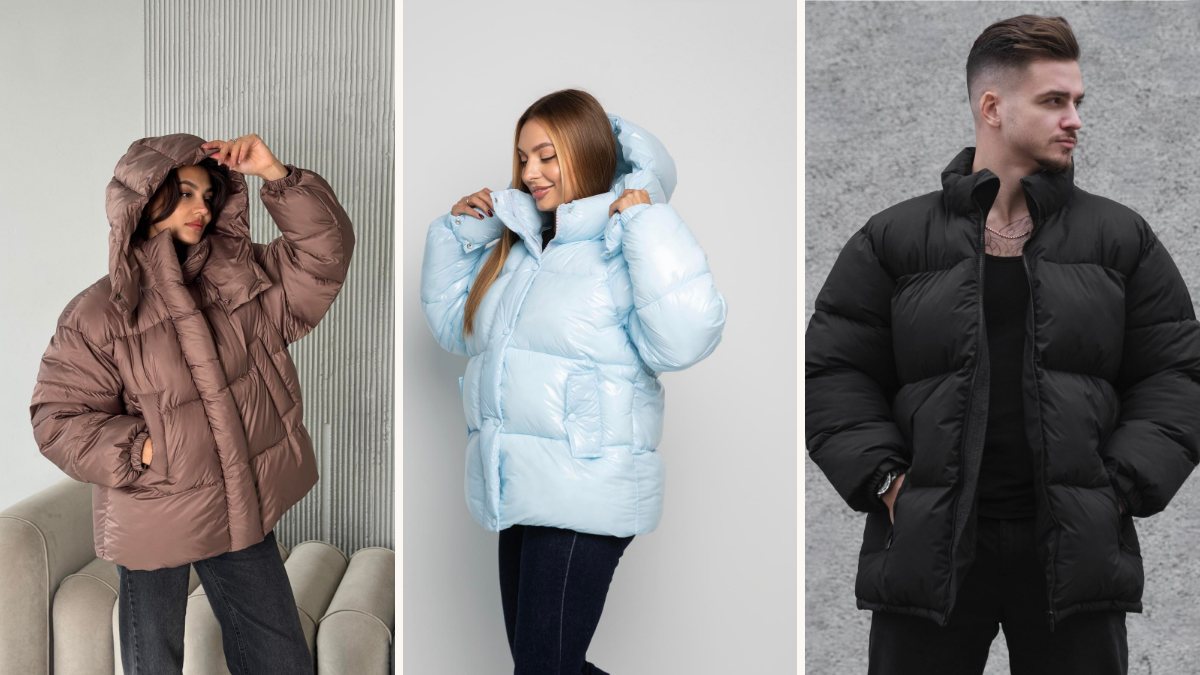
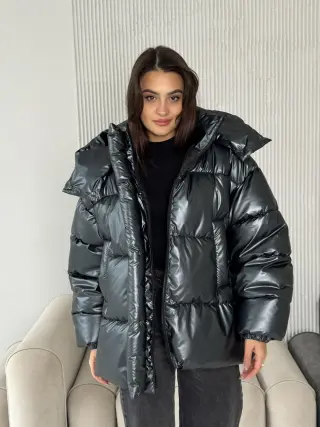
Natural down absorbs a lot of water, gets heavier and clumps into dense lumps. That is why it takes a long time to dry, and there is no point rushing. Drying such a jacket on a radiator or next to a heater is a bad idea: down that gets overdried by heat becomes brittle and holds its loft worse. While the jacket dries, you have to break it up by hand several times, spreading the lumps across the baffles, otherwise the filling will stay in the corners. This is exactly how models like the graphite glossy down jacket with natural down or the quilted Without Nest with down filling behave.
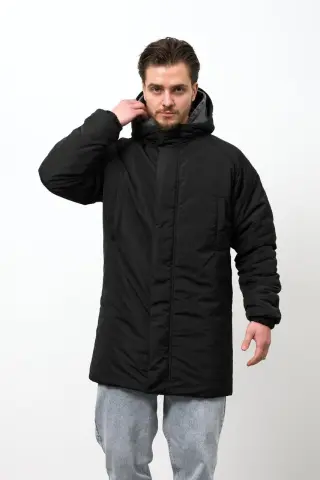
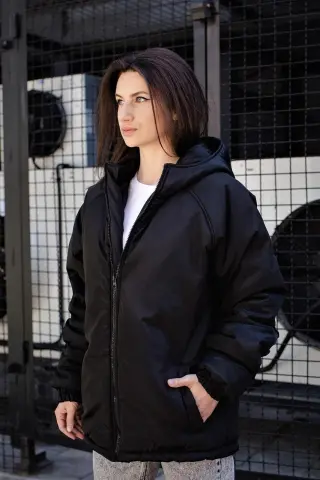
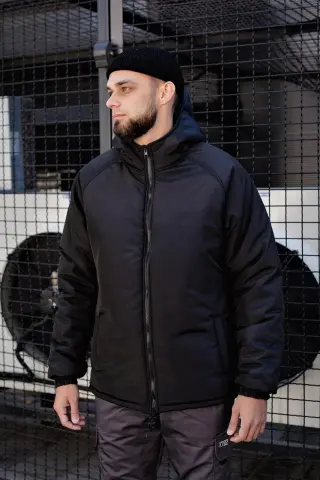
Synthetic insulations, such as Hollosoft in the Without Snowman parka or the Without Mountain jacket, handle washing more easily. They absorb less water, dry faster and clump less often. The weak spot of synthetics is different: high temperature. Hot water or heated drying can deform the fibers, and the insulation will lose its springiness.
Also look at the outer fabric, because it sets rules too:
- Membrane outer fabric. Wash only with a mild liquid detergent, without fabric softener. Softener clogs the membrane's pores, and it becomes worse at wicking moisture and protecting against wind and wet snow.
- Glossy and lacquered outer fabric. A shiny surface is sensitive to friction and harsh detergents, so check the label once more before washing: for some of these models only gentle or hand washing is allowed.
- Combinations. If down is combined with a membrane, take both restrictions into account at once: a mild detergent without softener and slow drying without heat sources.


How to dry without lumps and what to do if the down has already clumped
After washing, the down sticks together into damp lumps, and it is the drying that decides whether the jacket regains its former loft. The main rule is simple: moderate heat, regular movement.
Air drying
- Lay the jacket flat on a drying rack or hang it on wide hangers. Zip it up so the front panels don't twist out of shape.
- Keep it away from radiators, heaters and direct sunlight: sudden heat dries the down out and makes it matt together, and the fabric can warp.
- Every few hours, shake the jacket and knead the baffles with your fingers to break up lumps. Turn it over so both sides dry evenly.
Tumble dryer
If the square with a circle on the label is not crossed out, you can dry the jacket in a machine on low heat. Put two or three dryer balls or tennis balls in the drum: they keep hitting the baffles and stop the down from sticking together. Take the jacket out from time to time and check how it's going.
How to tell the down is dry
The fabric can look dry on the outside while the filling inside is still damp. Feel each baffle: dry down is light, springy and crumbles under your fingers, while damp down feels like dense, slightly cold lumps. Smell the jacket: a musty smell means it needs more drying. Do not put a jacket that isn't fully dry into the wardrobe, the down may go moldy.
If lumps have already formed
- Break up the lumps by hand, spreading them across the whole baffle.
- Tumble the jacket in the dryer with balls on low heat, if the label allows it.
- If the down has clumped very badly, lightly dampen the jacket with clean water, spin it out on a gentle cycle and dry it again, kneading the baffles regularly.

When to take it to a dry cleaner and how to make care easier
The washing machine copes with most down jackets, but there are cases when the risk of ruining the garment outweighs the savings. Take the jacket to a dry cleaner if:
- the label shows a crossed-out tub, meaning water washing is prohibited;
- there are old greasy stains: from machine oil, cream, fatty food. An ordinary down detergent won't dissolve them, and hot water or active rubbing will only set the mark;
- the hood or cuffs are trimmed with fur that doesn't detach;
- the outer fabric has a complex coating: lacquered, metallized or with a printed design that may crack;
- the down has already clumped badly or slid down to the bottom of the baffles before washing. This needs professional re-fluffing, tennis balls won't help.
If none of these apply, check yourself against a short checklist before pressing "Start":
- The label allows machine washing, and the temperature is not above the one shown.
- Pockets are empty, zippers and hook-and-loop fasteners are closed, the jacket is turned inside out.
- The detergent is liquid and meant for down or delicate fabrics, with no softener.
- The cycle is gentle, the spin is low, an extra rinse is added.
- Drying is long, with periodic fluffing, until the filling is dry all the way through.
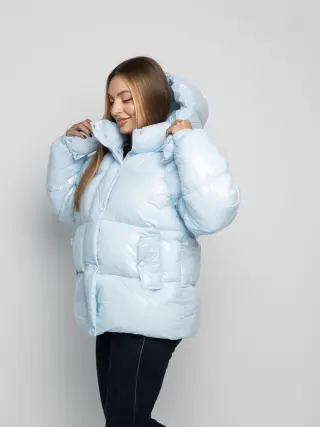
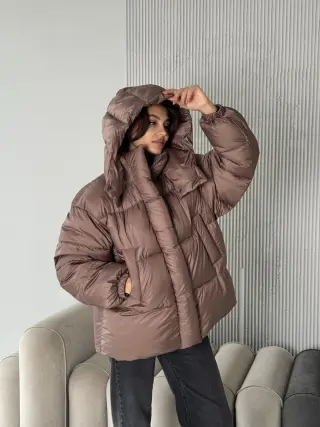
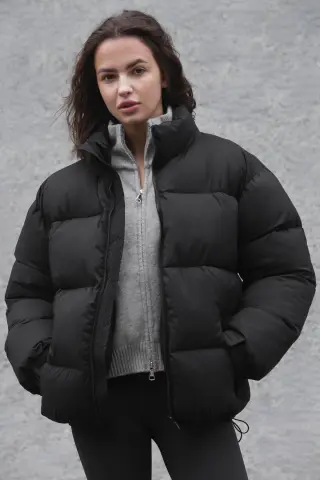
And a tip for the future: when choosing a new winter jacket, check the label right in the fitting room. Synthetic insulation and dense quilting make care noticeably easier: the filling is less afraid of water and drying it is less critical, while small baffles keep it from sliding down. For example, the Without parka and jacket use Hollosoft insulation, and in the blue down jacket the quilted baffles distribute the insulation along the whole length. Such models are easier to keep in good shape at home, without regular trips to the dry cleaner.