Women's Down Jackets
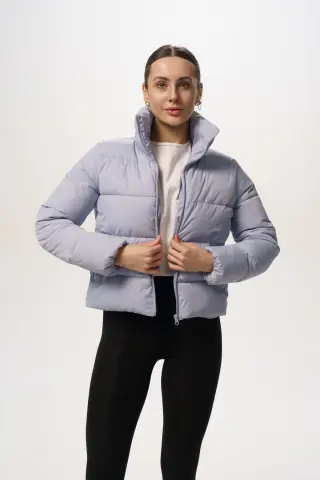
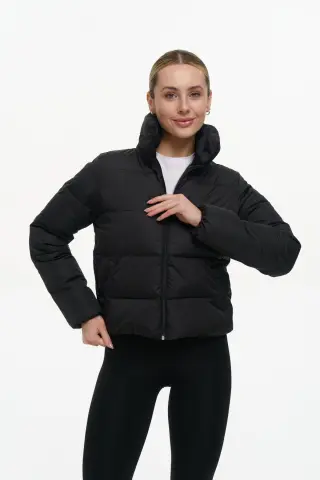
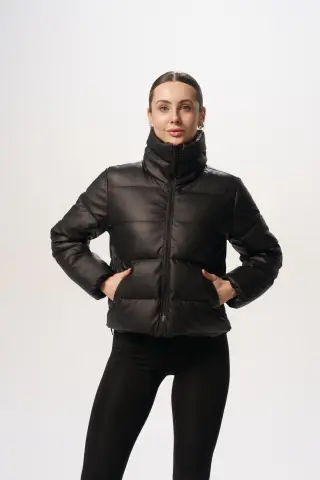
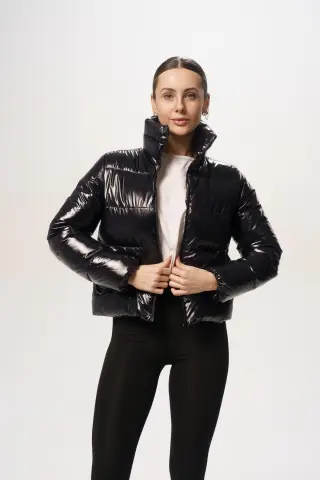









Women's down jacket: what to check besides the colour
A women's down jacket is bought for several winters, so it deserves as much care as a pair of boots. On a hanger, styles look alike, and the difference only shows in the first strong wind or wet snow. Here are a few things worth checking before you even try one on. If you are torn between a down jacket and a regular coat, compare them among all winter jackets.
What is inside the jacket
The name "down jacket" has long described the look more than the contents: it covers natural fill as well as puffers with synthetic insulation. So first read the insulation line in the specifications. A natural down jacket compresses almost into your palm and springs back quickly, but it demands patience when drying. Eco-down and bio-down are slightly heavier for the same warmth, yet they handle home washing more calmly.
A simple test: squeeze the hem in your hand and let go. If the section regains its volume within a few seconds, the fill is springy. If a limp dent remains, there is less air inside, and air is what keeps you warm.
Quilting: why the sections matter
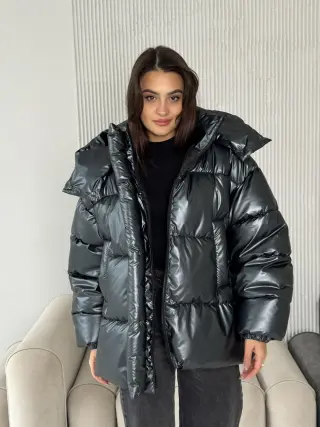
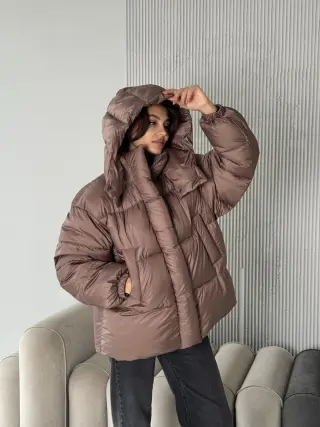
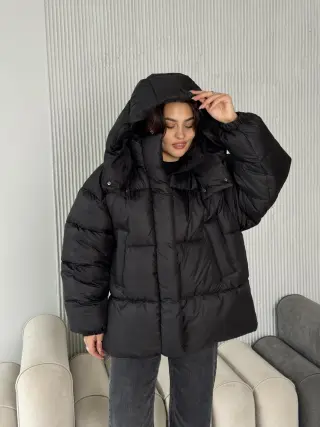
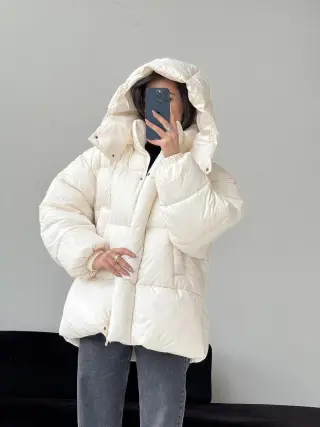
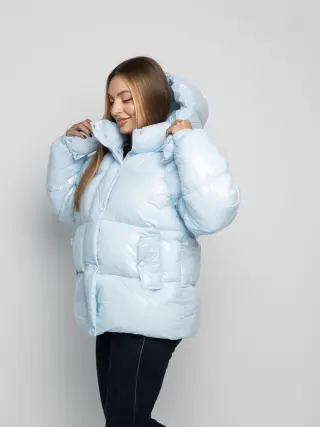
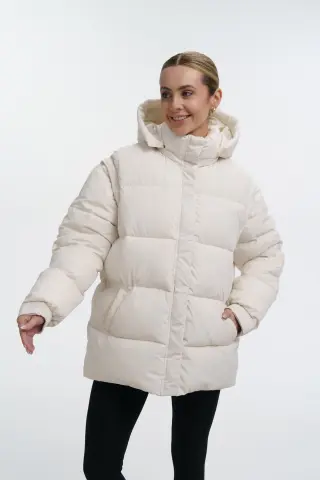
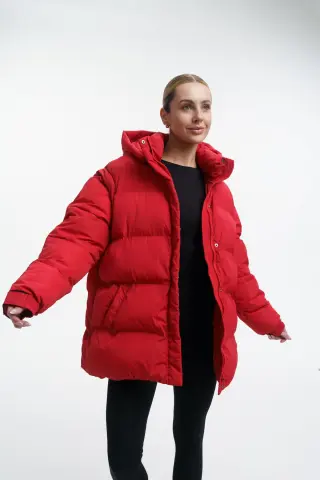
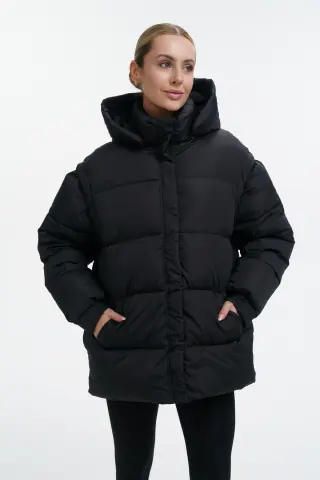
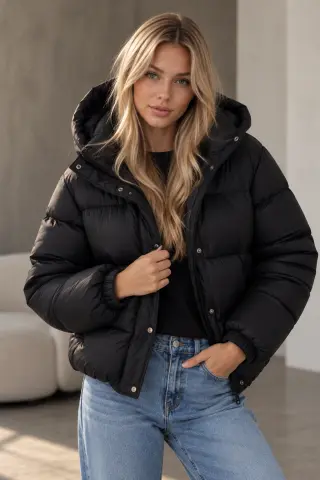
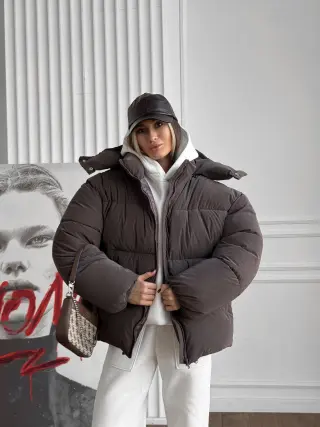
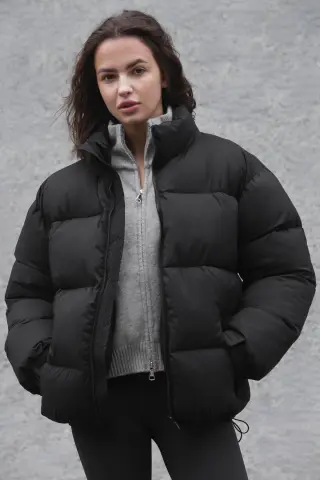
Insulation sits in quilted compartments, and their size determines how the garment looks and behaves. Wide horizontal sections create the puffy silhouette that visibly adds volume. Narrow quilting looks slimmer, but the layer is thinner along the seams, and that is where you feel the cold first. Hold the jacket against the light and run your hand over the sections: the filling should lie evenly, with no empty corners or lumps.
Length and fit for your day
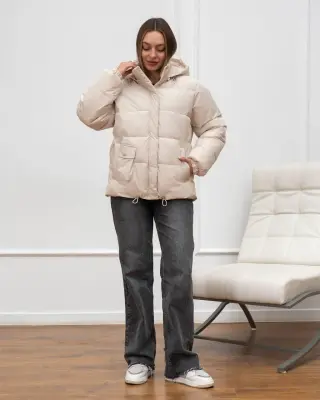
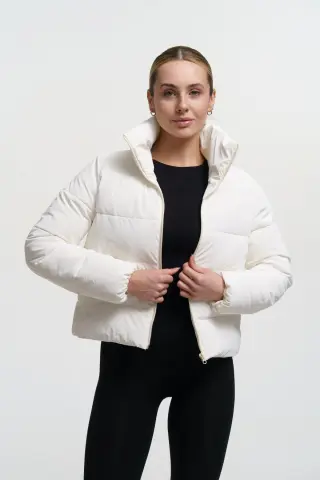
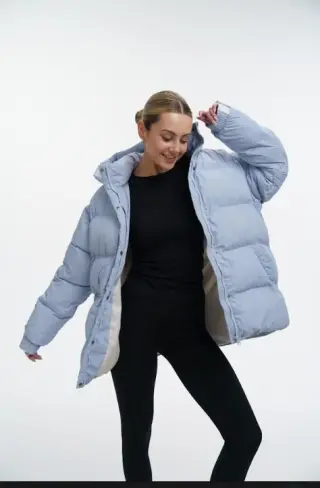
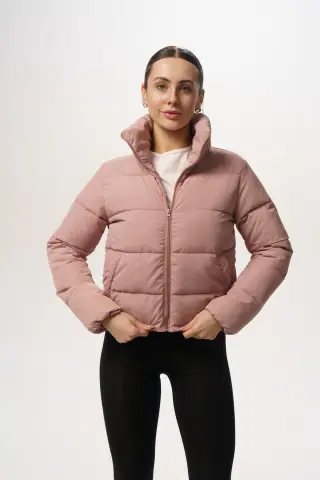
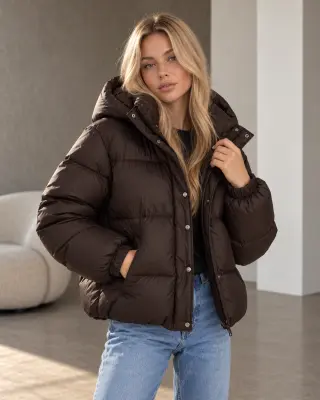
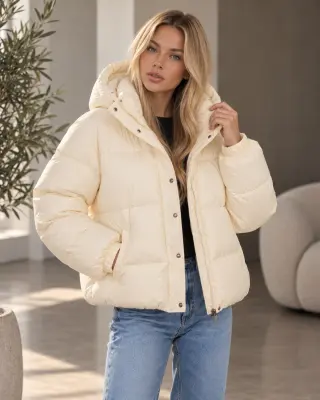
Behind the wheel and on public transport, a cropped down jacket is more comfortable because it does not bunch up under you. Walking suits a hip-length cut better, since it covers the lower back. A roomy oversized down jacket leaves space for a thick sweater, but check that no wind gets in from below: a drawcord, elastic or a cord with a toggle solves this. Try the jacket on over what you will actually wear and raise your arms: the hem should not ride above the waist.
Details that keep the warmth in
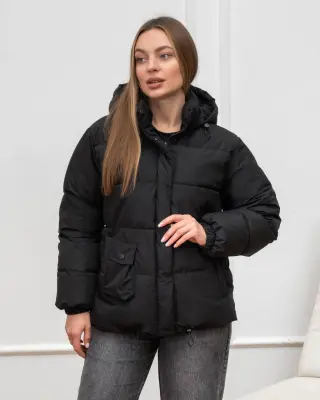
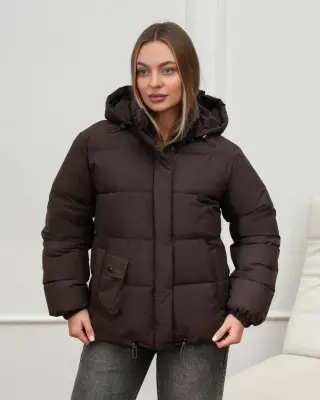
Most of the cold gets in through the neck and wrists. A high stand collar partly replaces a scarf, and a down jacket with a hood helps in a snowfall if you do not wear a hat. Elastic or Velcro cuffs keep the wind out of the sleeves. A zip under a protective placket matters too, because without it cold seeps along the fastening. Test the pockets with your hand: they should sit high enough that you do not have to reach down.
Frequently asked questions
Why does a down jacket sometimes shed fluff?
Natural fill can occasionally work through the fabric and seams, and a few bits of fluff in the first weeks are not a defect. Do not pull them out: gently draw the fluff back in from the inside, and the hole will close by itself.
Should I wear several layers underneath?
One warm layer works better than several tight ones: when clothing compresses the fill from inside, there is less air and therefore less warmth. So choose a sweater that does not stretch the sleeves.
Where should I store a down jacket in summer?
On a hanger or loosely folded in a breathable cover. It is better not to use a vacuum bag for several months: the volume then takes much longer to return.