Women's Puffer Vests






Women's Puffer Vest: How to Choose One for Your Weather and Wardrobe
A women's puffer vest covers the back and chest, the places most sensitive to cold, and leaves your arms free. It is what you reach for when a jacket is too hot and a sweater alone is too cool: on the morning commute, at the wheel, on an evening walk. To keep it from sitting in the closet, decide three things first: how much warmth you need, which length suits your figure and what you will wear under it. If you are still choosing between a warm style and a business one, compare all women's vests.
How Warm It Is
The warmth comes from the puffy sections: the filling holds air, and the shell fabric stops the wind. Your arms stay uncovered, so in a biting wind a vest loses to a jacket. It works best above freezing, from early spring to late autumn. In freezing weather, wear it as an extra layer under a coat, but first check that the coat closes over it without strain.
Length and Proportions
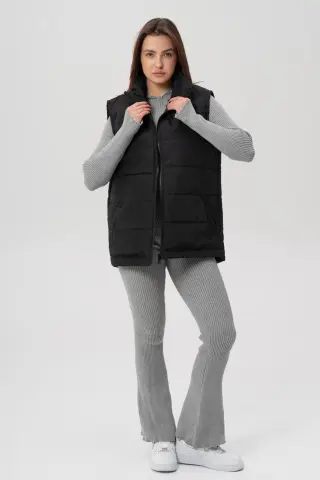
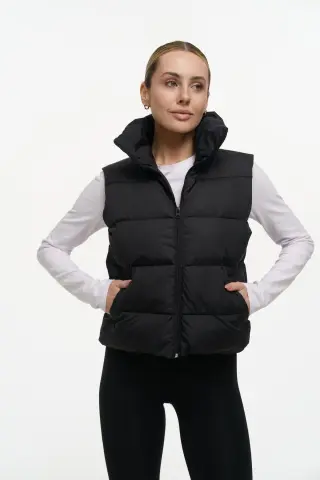
A short style shows the waist, so your legs look longer, especially with high-rise trousers or a skirt. If you are petite, this is a simple way not to drown in the volume. Cropped vests have a drawstring with a toggle at the hem: pull it tight and the cold stays out. A longer style covers the lower back better, so it feels cozier at the wheel or on a bench. If your hips are wider than your shoulders, make sure the hem does not end at the widest point, where it adds even more volume.
Stand Collar or Hood
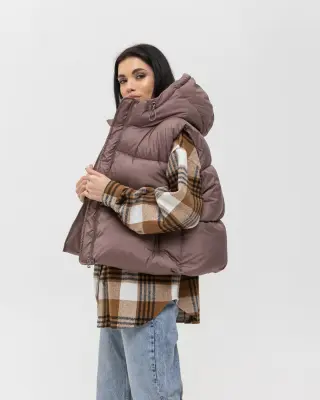
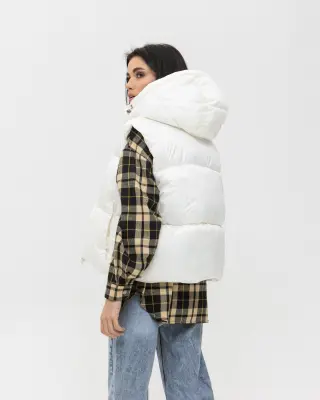
A stand collar shields the neck from drafts and keeps a clean line: a scarf sits easily on it, and a coat goes on top without extra bulk at the back. A hood helps when rain or snow starts and you have no hat, so hooded vests suit those who walk a lot. At the wheel or with a backpack it tends to get in the way. The fastening matters every day too: snaps open quickly with one hand, and a zip closes more tightly against the wind.
What to Wear Under It
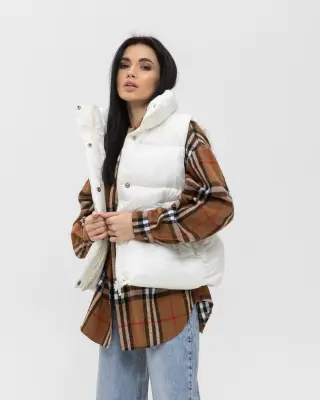
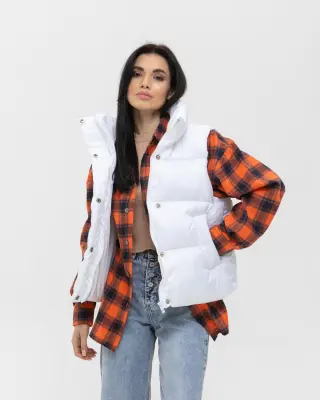
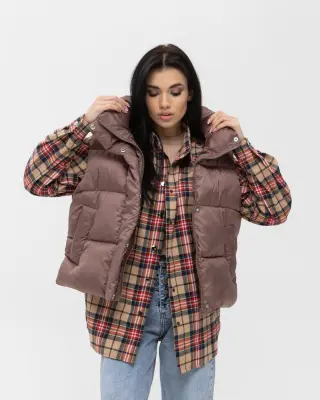
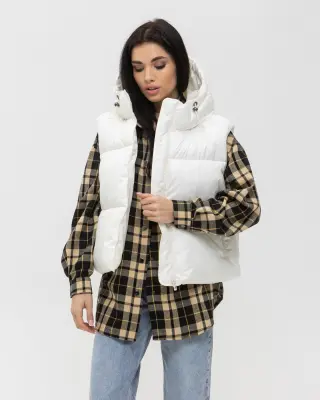
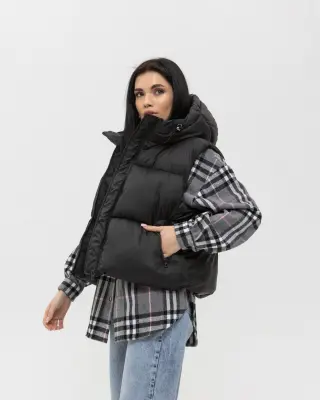
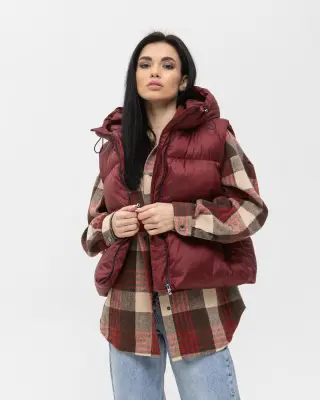
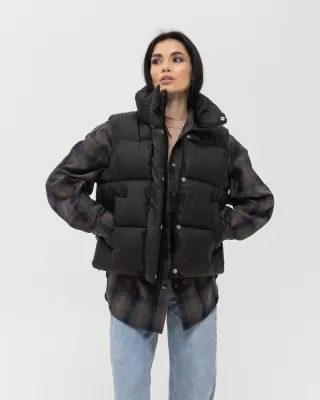
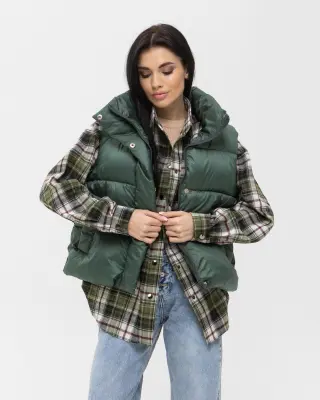
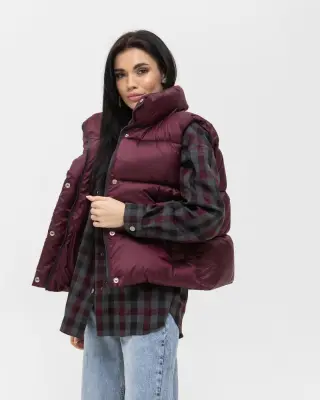
The sections take up room, so before buying think of the thickest piece you plan to wear under the vest. Over a thin shirt it may sit closer to the body, while a hoodie or chunky sweater needs some spare room. When trying it on, raise your arms and sit down: the armholes should not cut in, and the fastening should close with no effort. A plaid shirt gives a layered look, while a long-sleeve top and wide trousers give a calm city one.
Color and Practicality
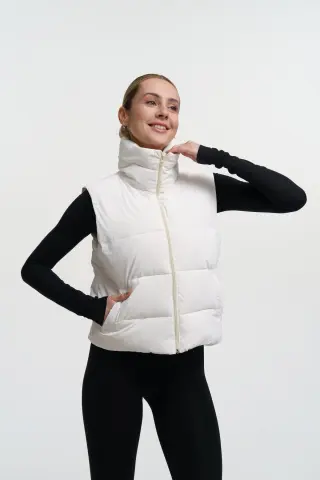
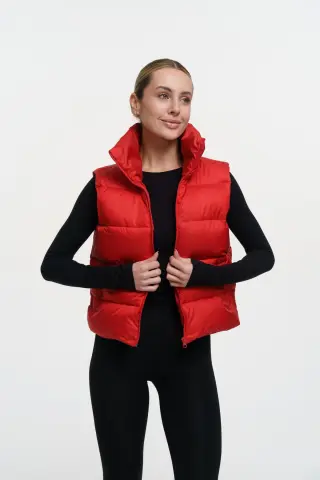
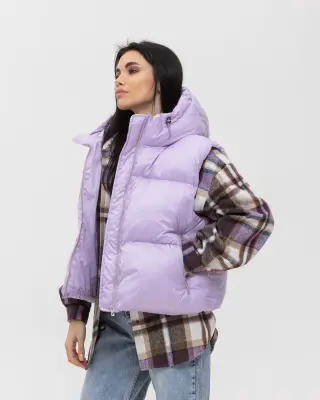
Dark shades show less dirt and slightly reduce the volume, and a black vest also goes with almost everything. A light one brightens the face but needs more attention: if that does not put you off, see the white styles. A rich shade makes the vest the main piece of the outfit, so keep everything else simple.
Frequently Asked Questions
How do I wash it so the filling does not clump?
Fasten the vest and choose a gentle cycle with cool water. Dry it flat, and when it is nearly dry, gently fluff the sections by hand.
Does the shell fabric get wet?
Wet snow and light rain are no problem, and dirt wipes off easily with a damp cloth. In a downpour it will not replace a raincoat.
How is a quilted vest different from a puffer?
A quilted one is thinner and lighter, easy to hide under a coat or wear on a warm spring day. A puffer has more volume, so it keeps you warmer when the air is cooler.