Women's Plaid Shirts




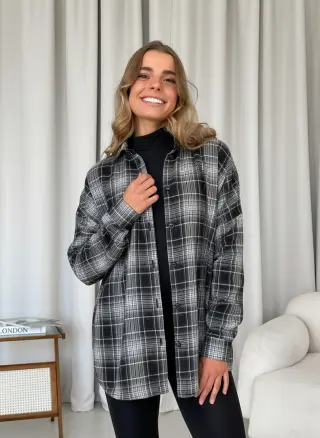
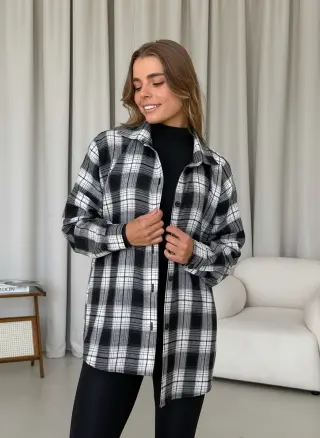









Women's Plaid Shirts: How to Choose the Pattern and Fabric
A women's plaid shirt can be the main piece of an outfit or a calm background for it. Pattern contrast and fabric decide which. If you are still unsure about the style, first look through all shirts and blouses.
Pattern Contrast
Black with yellow stands out from a distance, so keep the rest of your clothes plain and free of small details. Graphite with burgundy is more restrained and easy to wear to an office with no dress code. Brown and caramel plaids are softer and look good next to denim, suede and cream knits. If in doubt, hold the shirt up to your face by a window: you will see at once whether the color freshens you or makes you look tired. If you like a dark base, also take a look at black shirts.
Cotton or Flannel
A cotton shirt is thinner and is worn in spring and autumn over a T-shirt instead of a light jacket. Flannel is thicker with a soft nap, so in cold weather it works as a warm layer of its own, with room for a turtleneck or long-sleeved top underneath. Think about where you will wear it most: in a heated office flannel may be too much, while in a November wind cotton no longer keeps you warm.
What to Wear It With
Plaid needs calm surroundings. The simplest pairing is dark straight jeans and ankle boots. With a midi skirt and tall boots the look becomes more interesting, especially when the skirt repeats one of the pattern's colors. Do not combine two different plaids or add stripes, because the eye quickly tires of so much pattern. A loose fit also needs balancing, as explained on the page about oversized shirts, and when the pattern feels like too strong an accent, consider solid-color styles.
Frequently Asked Questions
Which plaid does not add volume?
A small, low-contrast pattern looks calmer than a large, bright plaid. An open shirt over a plain top creates a vertical line, and the silhouette looks longer.
How do I wash it so the colors stay bright?
Do up the buttons and turn the shirt inside out. Choose a gentle cycle and cool water, and dry it spread out, away from direct sun.