Women's Plus Size Pants
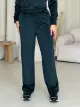
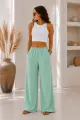
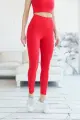

Women's Plus Size Pants: How to Choose by Measurements
Women's plus size pants should fit so well that you can forget about them: the waist does not dig in, and the fabric does not pull at the hips or bunch under the stomach. When you buy online, rely on measurements and not on the letters on the label, because the same size means different things from one brand to another. General tips on styles are on the women's pants page.
Which Measurements to Take
One measurement matters most: the hips at the widest point, with a tape over thin clothes. For pants with an elastic waist it matters more than the waist, because the elastic will stretch, while the room at the hips has to be built into the cut. Some styles have double labels: 2XL/3XL corresponds to 50-52 and hips of 111-120 cm, and 4XL/5XL corresponds to 54-56 and hips of 121-130 cm. In other styles the range goes up to 4XL. Compare your own numbers with the parameters of the specific model, and if you fall on the border of two labels, take the larger one.
Waist and Stomach
The waistband should sit at the waist or slightly below it, but not under the stomach: in that position it does not roll or slip as you walk. When the pants arrive, sit on a chair for a few minutes: the elastic should not leave a deep mark. Ties or a drawstring help if your waist is much narrower than your hips. Side pockets matter too: a heavy phone spreads their edge and adds volume at the hips, so it is better to carry it in a bag.
What Each Style Does
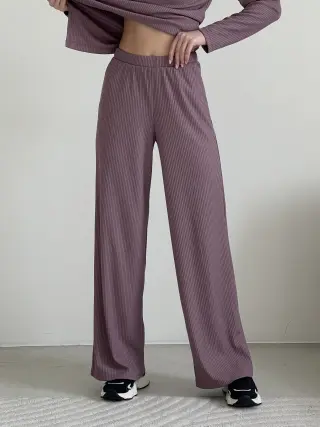
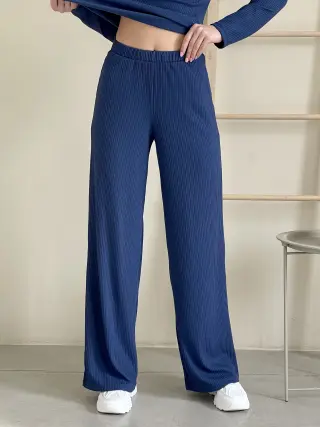
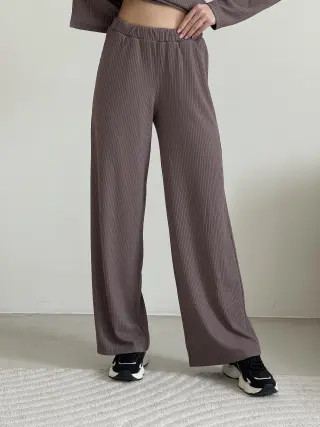
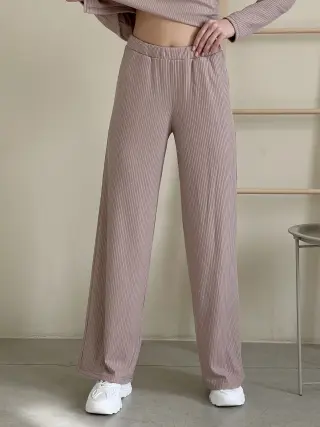
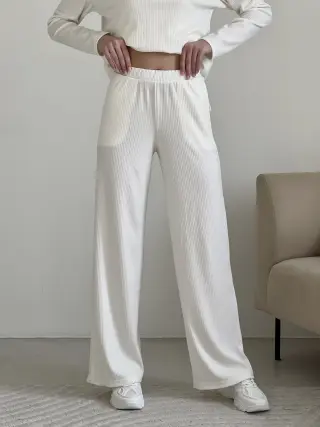
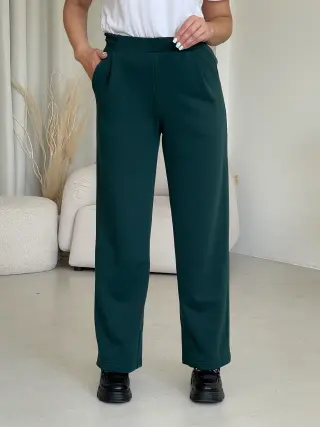
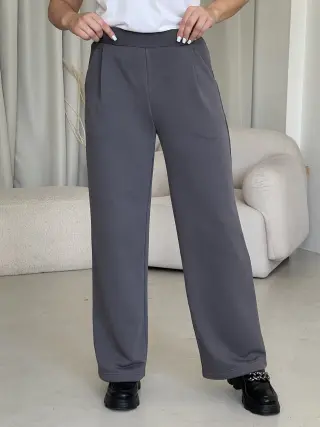
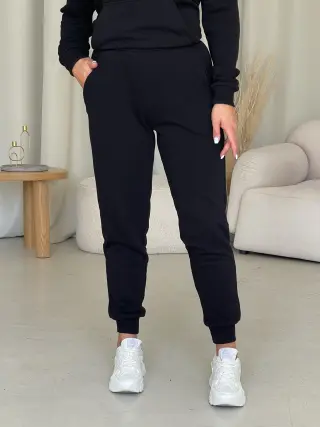
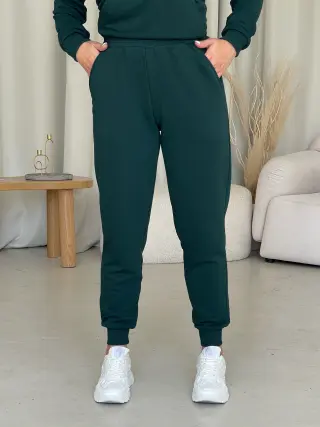
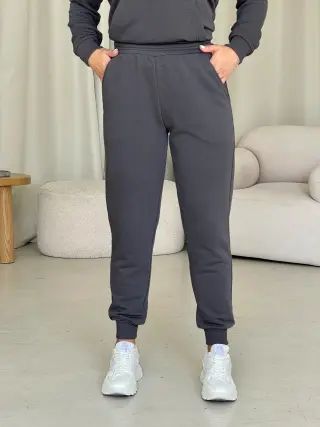
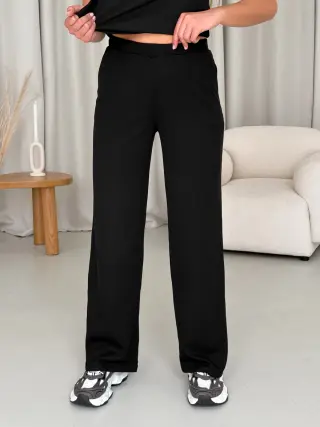
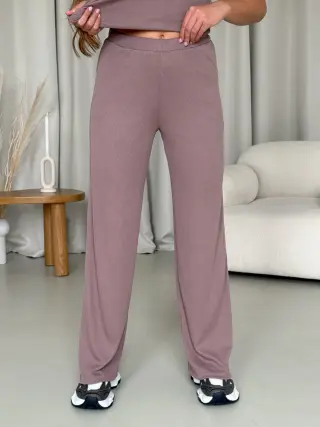
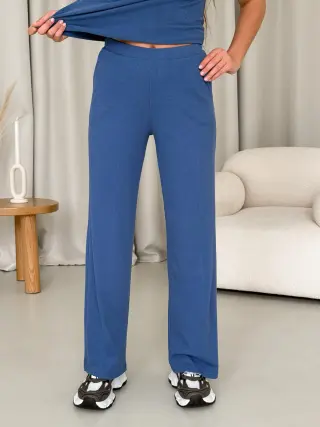
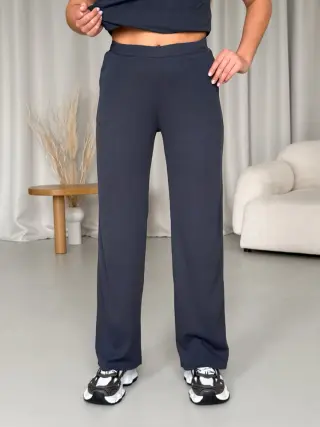
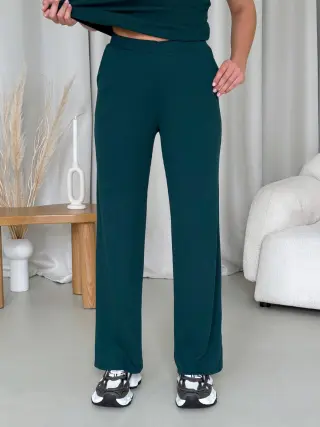
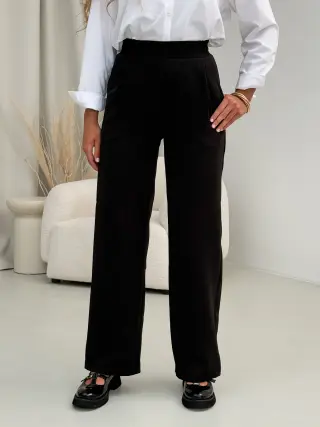
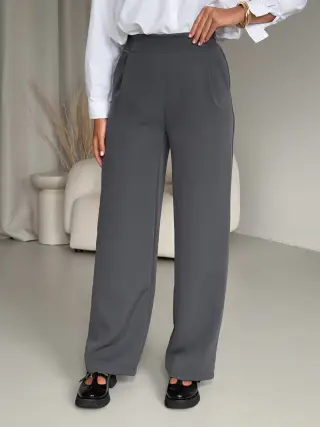
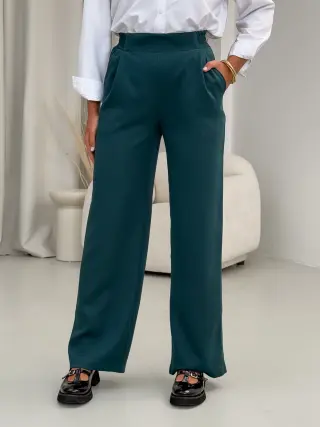
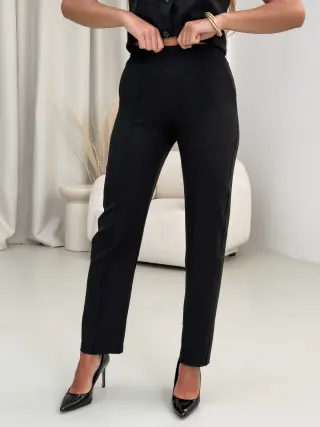
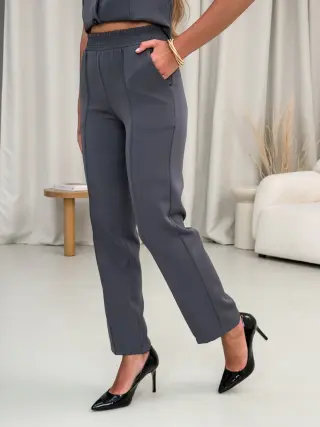
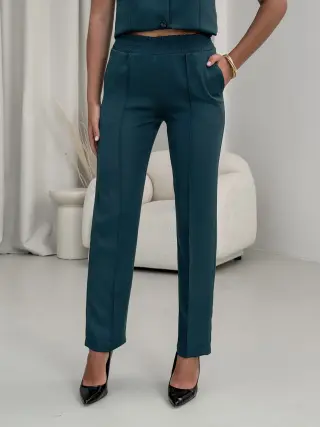
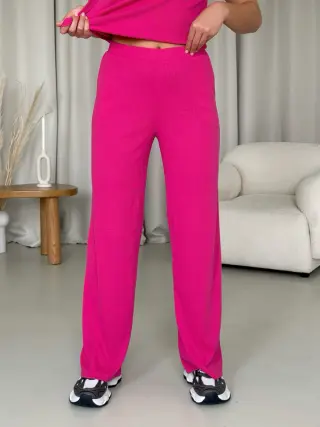
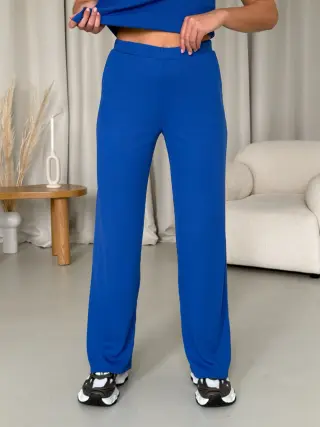
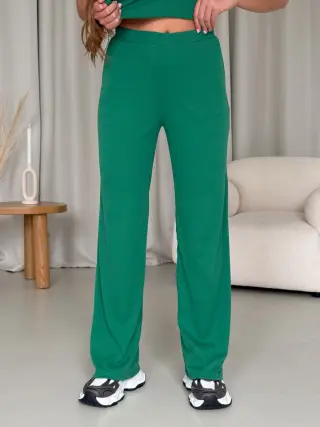
Palazzo pants fall straight from the waist, so they hide volume at the hips and calves. Flares sit closer to the body at the top and trace the hips, but the wide hem balances them, which is flattering with a defined waist. Cargos add width with patch pockets, so they suit those who do not aim to hide their hips. Joggers gather the leg at the ankle and show the narrowest part of the leg, but the tapered hem stresses the width above. Classic creased pants hold a straight line and look neat at the office.
Which Fabric Smooths and Which Highlights
Dense fabric smooths, while thin fabric settles on every fold. Suiting fabric has low stretch and holds its line, so the silhouette looks more even. Rib knit is more comfortable and stretches with you but shows your outline, although the vertical rib lengthens the leg. Dense cotton sits loosely and handles rubbing on the inner thigh better, where thin fabric wears out faster. If your thighs often rub, look at density first.
Length Is Separate From Size
A large size does not mean tall. Wide styles are 110 cm long and classic ones 101 cm, so if you are petite, you will need to hem them. Do it for your favorite shoes: extra folds at the bottom add volume where you do not need it.
Top and Color
One color on top and bottom creates a solid vertical, so black pants with a black top make the silhouette look taller. A dark bottom with a light top moves attention to the face and shoulders. The edge of your top should not end at the widest point of the hips: a shirt tucked in at the front or a top down to mid-thigh works better. A close-fitting top with a loose bottom balances proportions, while a loose top with a loose bottom adds volume everywhere.
Frequently Asked Questions
Can I wear wide pants with a fuller figure?
Yes, a straight wide line hides hip volume better than slim styles. Pair it with a top that shows the waist or the shoulder line.
What if my hips are much bigger than my waist?
Choose the size by your hips and adjust the waist with ties or a drawstring. The elastic will gather a few extra centimeters at the waist by itself.
Will the pants shrink after washing?
At up to 30°C and without a tumble dryer, the risk is small. Hot air does the most harm, so let them dry naturally.