Women's Mid-Season Plus Size Suits
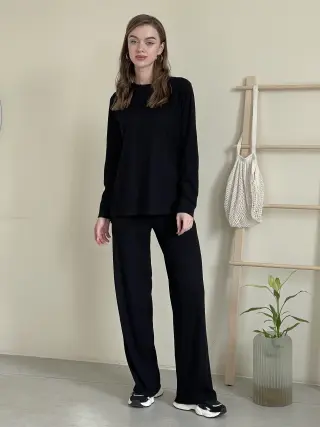
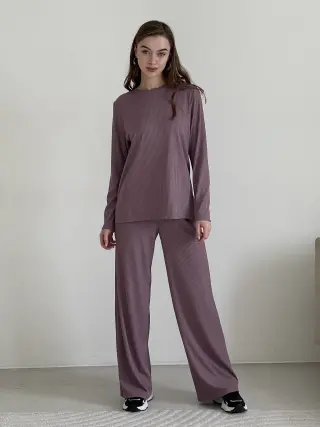
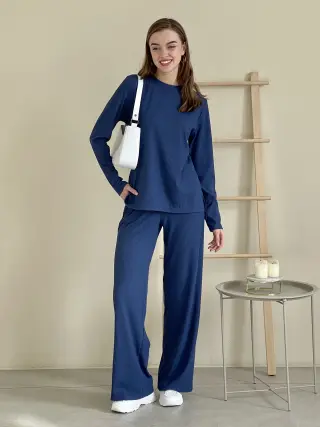
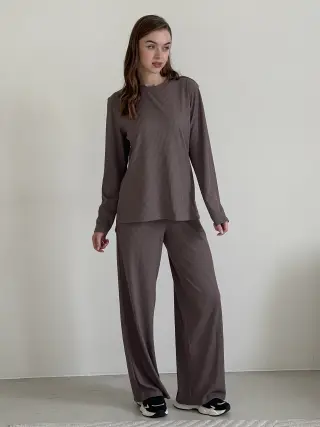
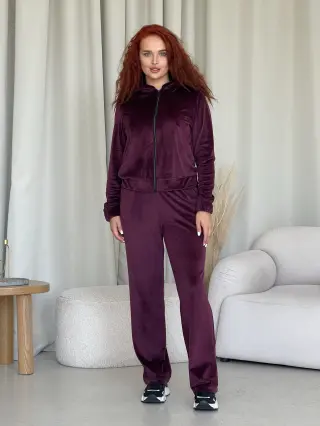
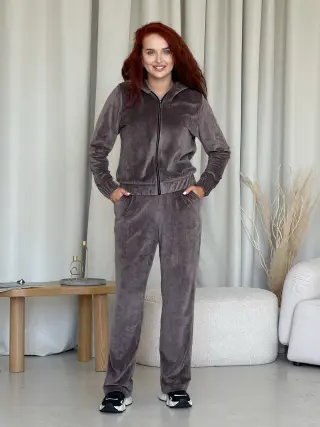
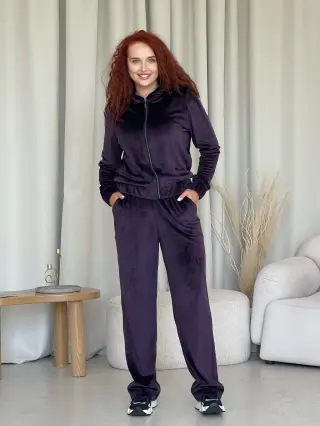
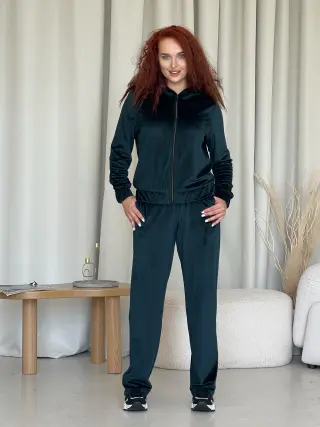
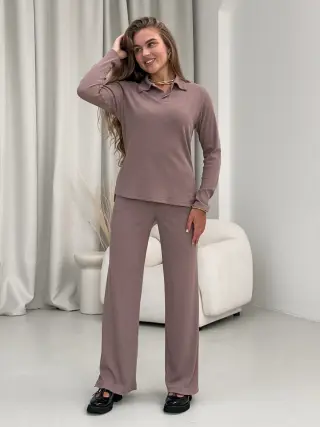
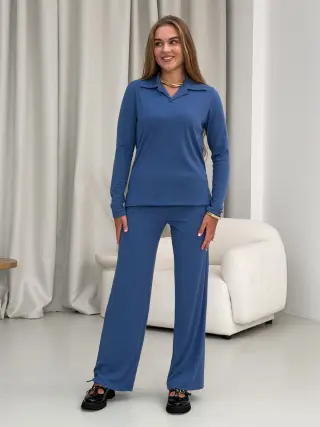
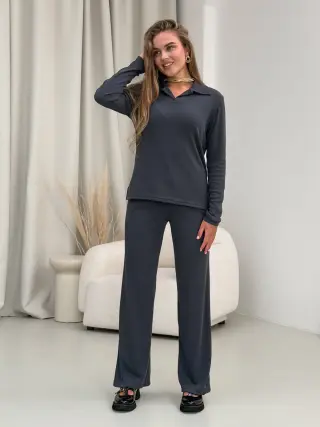
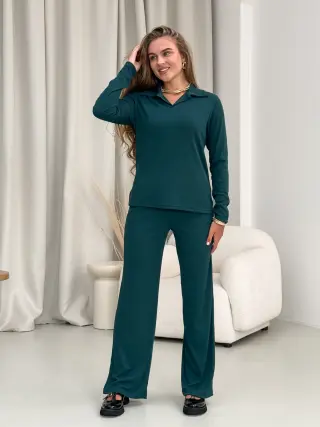
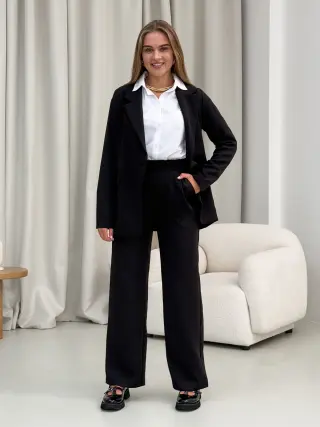
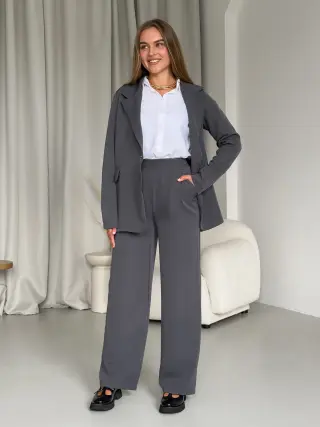
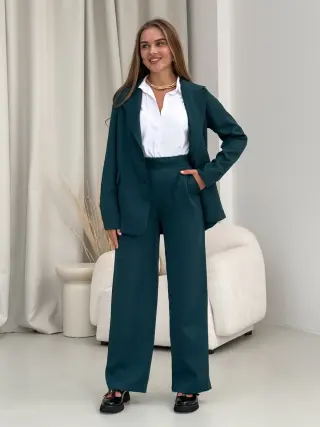
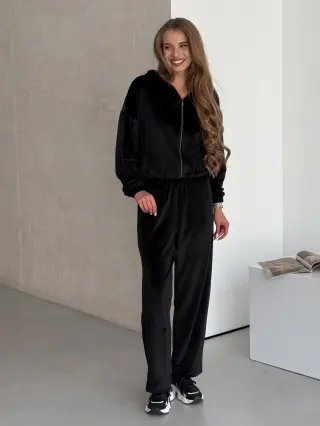





Women's Plus Size Suits: Measurements, Proportions, Fit
A women's plus size suit for spring and autumn is chosen with a tape measure, because the usual number says little: different fabrics fit differently. The set should be comfortable when sitting, not pull at the hips and not turn the figure into solid volume. All of this depends on a few simple decisions. General seasonal tips are among all mid-season suits.
Double Labels and Measurements
One label on these suits covers two sizes: 2XL/3XL equals 50–52, and 4XL/5XL equals 54–56. At the largest label the bust reaches 125 cm and the hips 130 cm. Take both measurements over thin clothing and compare them with the model parameters. If your bust falls under one label and your hips under the next, take the larger: the elastic will take in the waist, but nothing makes up for too little fabric at the bust or hips.
Stretch Tells You How Much Room You Need
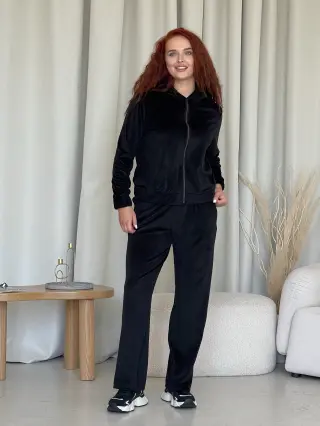
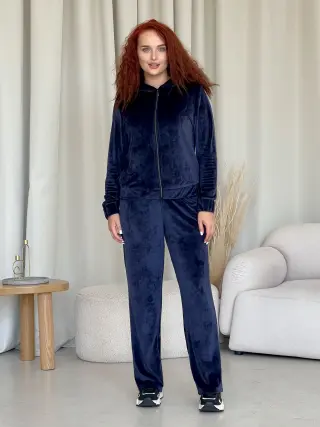
Rib and velour stretch best, so they forgive a few centimeters and work well when your measurements sit on the border. A knit blazer stretches moderately, and suiting hardly gives at all. There the measurement decides: if it falls short, the button pulls and the lapels spread. Check that the blazer fastens without effort with your arms down and stretched forward.
Which Top Suits Your Proportions
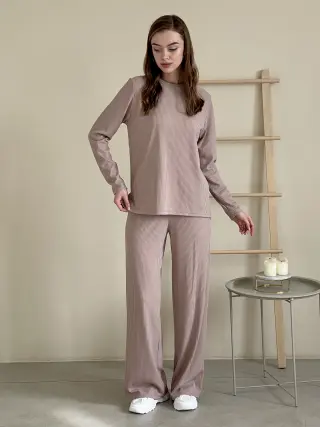
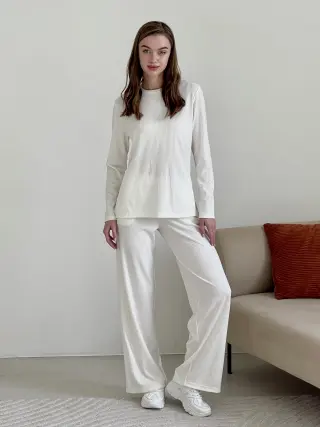
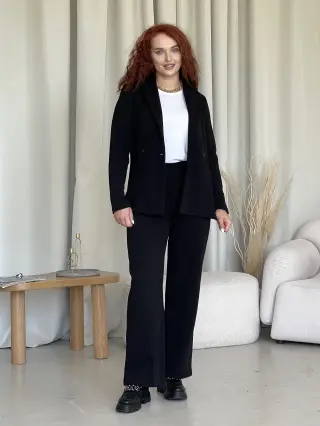
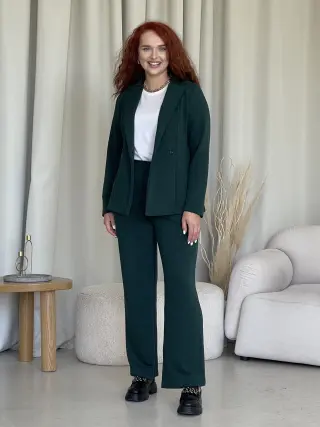
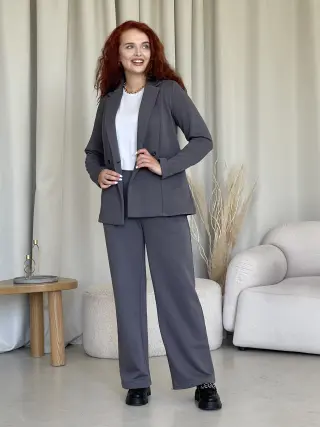
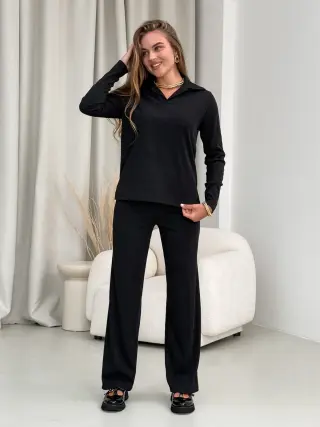
If volume sits at the hips, a wide lapel broadens the shoulders and balances the bottom. If it sits at the stomach, a vertical line helps: an open zip top runs from neck to hips, and a one-button blazer forms a deep neckline that lengthens the torso. A loose top with a turn-back does not cling to the stomach. A ribbed round-neck top sits closer to the body, but its side slits stop it pulling at the hips. Velour is soft, but the pile catches light at the folds and adds visual volume, so dark colors work better in it.
Pants: Hips, Stomach, Length
Palazzo pants fall straight from the widest point of the hip, so they hide the difference between waist and hips. The elastic should not dig in when you sit, so test this on a chair, since you will not notice it standing at a mirror. The pants are 110 cm long, but the stomach and hips take up some of the fabric, so measure from waist to floor along the side. If you are petite, you will need to hem them, and a wide leg takes this well.
Color and Lines
One color top and bottom lengthens the silhouette, and this works with any shade, not only black. Calm green or mocha also gives a solid vertical line and looks softer. Move any accent closer to the face: a scarf or earrings keep the eye up high. A contrasting top edge at hip level draws a horizontal line where you least need it.
A Jacket Over the Suit
Try on outerwear together with the suit and check the bust, hips and sleeves. A short jacket should not end at the widest point of the hips, or an extra line appears right there. A trench is easy to wear open: it adds another vertical line and needs no room to fasten.
Frequently Asked Questions
Should I size up for a looser fit?
No. Extra fabric adds volume, the shoulders drop and the cuffs slide over your palms. It is better to match your measurements and choose a loose cut.
Will a blazer work with narrow shoulders and wide hips?
Yes, a wide lapel makes the shoulders look broader and evens out the silhouette. Watch the hip measurement, as the edge of the blazer falls right there.
Where should I start if I need one everyday set?
Look at ribbed pantsuits: the fabric stretches, and the wide bottom goes well with sneakers and loafers.