Men's Water-Repellent Windbreakers



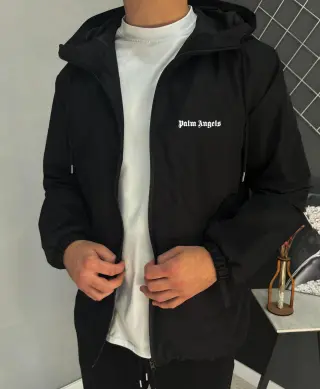
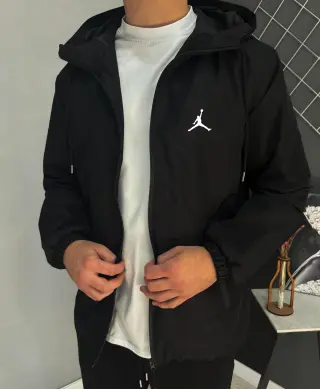
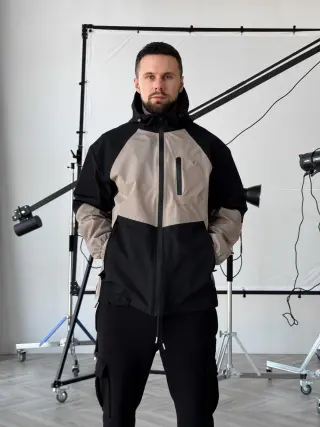
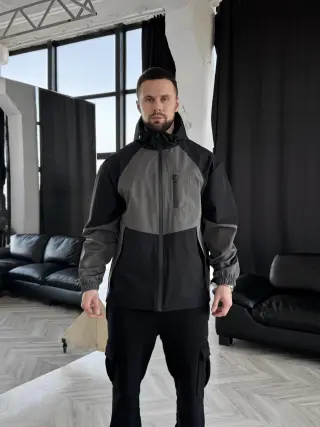









Men's Water-Repellent Windbreaker: What It Can Do in the Rain
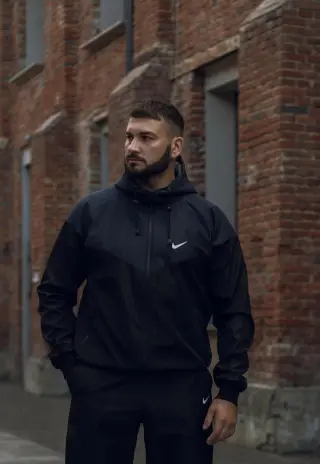
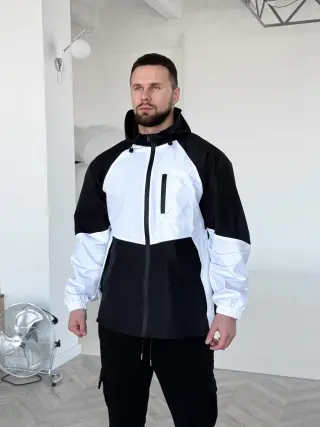
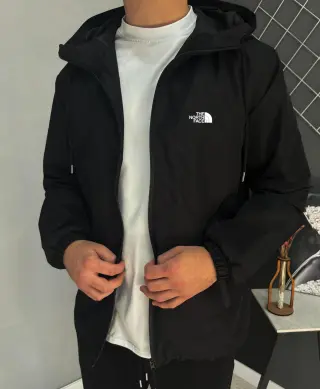
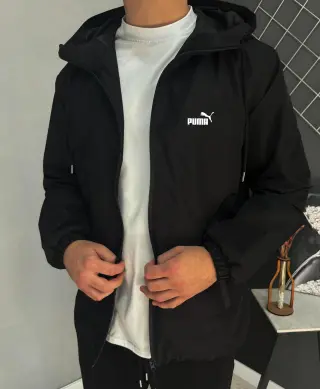
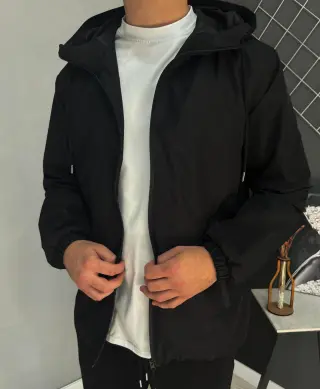
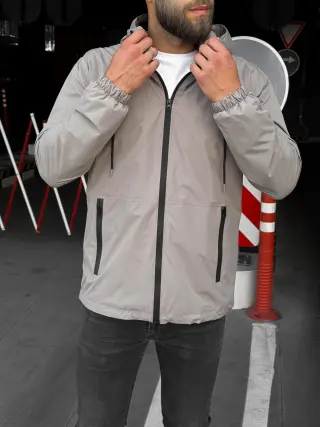
A men's water-repellent windbreaker sheds small drops from the surface of the fabric, so in drizzle or a short shower you can reach the car or shelter and stay dry. It is a light layer for spring and early autumn, not a replacement for a long raincoat. To compare it with other types, see all men's windbreakers and anoraks.
Water-Repellent or Waterproof
These words are often confused, although they suit different weather. The surface of a water-repellent fabric does not absorb water: drops gather and roll off. While the coating works, light rain is no problem. In a long downpour the fabric slowly gets wet, and moisture comes through the seams, the shoulders and the spots where backpack straps press the material against the body. If you often walk far in heavy rain, a long men's raincoat is more comfortable, since it also covers the thighs.
Membrane, Ripstop or Plain Fabric
Matte fabric with a membrane stops the wind and repels water, while moisture from the body escapes, so your back stays drier on a brisk walk. Ripstop, a fabric with a small grid, tears less easily and handles rubbing from a backpack and accidental snags, so it is useful on trips out of town. Light fabric without a membrane also sheds light rain, and elastic cuffs and hem keep the edges close to the body. This option works well on the way to the gym or for a short walk. Check the specifications of a style to see which outer fabric it has.
The Details That Usually Let Water In
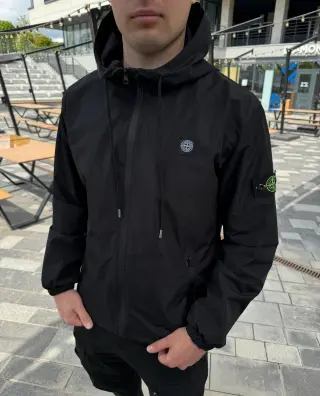
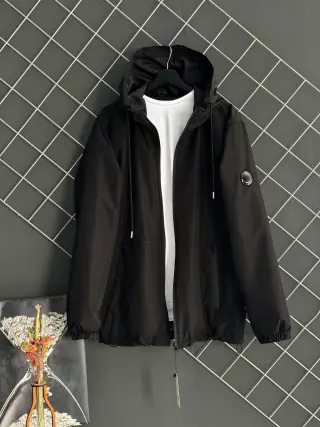
Fabric works together with the zips, hood and waist, and the weak spot is usually there. The center zip runs along the whole front, so water gets in along it first, and a waterproof zip really helps here. The same goes for pockets: behind waterproof zips a phone and documents stay dry longer. A hood should sit close around the face and adjust with a drawstring or an elastic with toggles, otherwise the wind pulls it off and water runs down your collar. An elastic waist gathers the hem, so the wind does not blow rain inside.
How to Choose Size and Layers
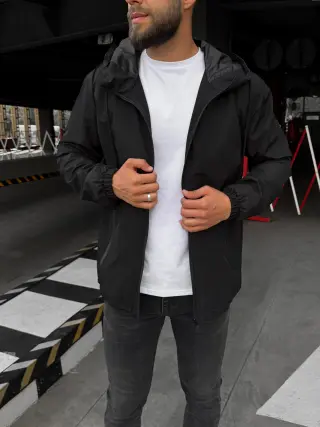
Thin fabric does not keep you warm by itself, so on a cool day you need one more layer under it. A straight windbreaker that ends at the hips easily fits over a T-shirt or a thin sweatshirt. If you want to wear it over a bulky hoodie, compare your chest and shoulder measurements with the style's parameters and take one size up if needed. Stretch your arms forward: the cuff should not uncover your wrist, because that is where the rain gets in first.
What to Wear It With
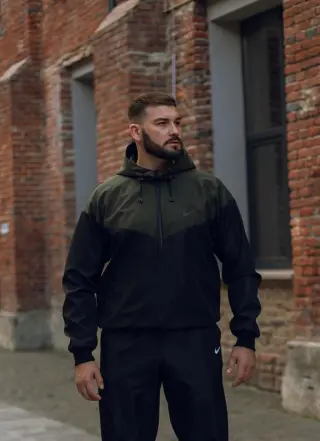
A smooth matte surface looks stricter than a glossy one, so this windbreaker goes well with jeans and a shirt, and sportswear is optional. Straight jeans, black cargo trousers and sneakers suit the city, while trousers with pockets and shoes that can handle puddles suit the road. A contrast panel or a gray shade freshens up a dark outfit.
How to Wash It So the Fabric Keeps Shedding Water
The ability to repel water weakens with frequent washing and softener. Close the zips, wash it separately in cool water on a delicate cycle and use a liquid detergent without softener, because softener clogs the membrane. Do not wring it hard, and dry it on a hanger away from a radiator so no creases remain. The test is simple: drip some water on the sleeve. If the drop rolls off, all is well. If the fabric darkens and absorbs water, it is time to renew the coating with a special spray for outerwear.
Frequently Asked Questions
How long will it last in the rain?
It handles drizzle and a short shower without trouble. Nobody can give an exact time, because it depends on how heavy the rain is and on the state of the coating. For a long walk in a downpour, a longer raincoat is better.
Is it hot in summer?
On a cool evening a T-shirt under a light windbreaker is enough, and you can open the zip. In the heat you will not need it, because dense fabric that stops the wind lets less air through.