Men's Quilted Shell Jacket












Men's Quilted Shell Jacket: What This Fabric Can Do
A men's quilted shell jacket is made for days when wind and drizzle are the problem, not frost. The dense synthetic fabric stops gusts, dries fast and cleans easily, and the quilting keeps the fill even inside. To compare this fabric with other outer shells, look through all men's demi-season jackets.
What It Can and Cannot Do
The smooth surface keeps small drops from soaking in, so your clothes stay dry in drizzle or a short shower. In a downpour, water will find the seams and the zip sooner or later, so take an umbrella on a long walk in bad weather. This fabric breathes less than soft shell: on a fast walk or in a warm bus your back can sweat if you zip up to the neck. Opening the zip evens out the temperature quickly.
Types of Shell Fabric
Windproof fabric mainly stops gusts and works well in the city. Matte water-repellent fabric has a finish that makes water bead up and roll off. A rubberized base holds out moisture longer but lets body heat out less easily, so it suits wet autumn days and an unhurried pace. Memory fabric keeps light creases and looks more textured, so it suits a restrained outfit. Read the product description before you buy: the word shell alone says nothing about rain protection.
Quilting: Narrow, Wide or Chevron
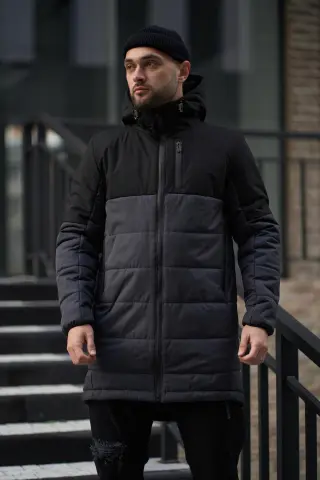
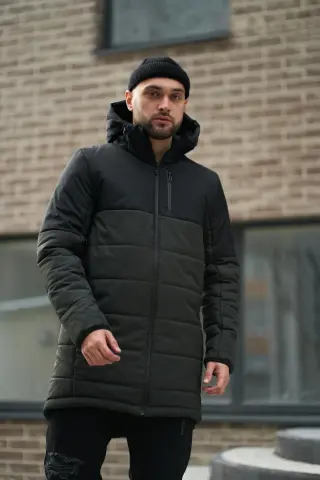
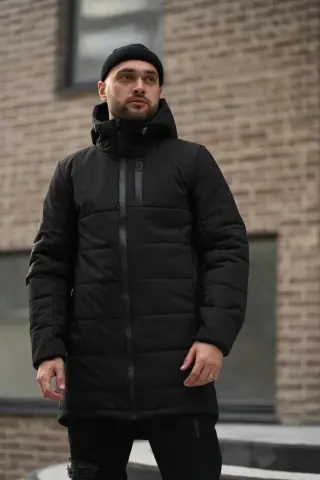
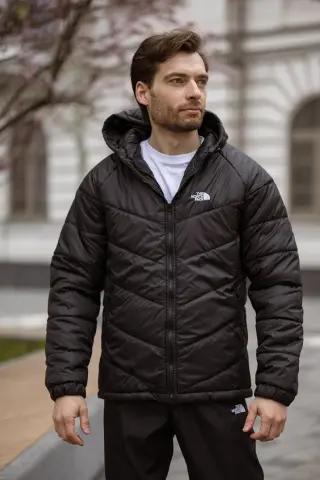
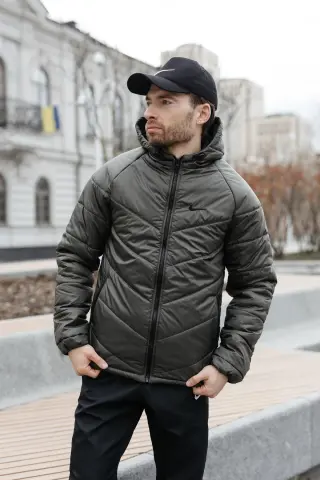
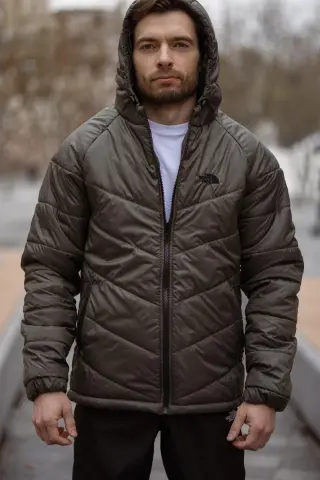
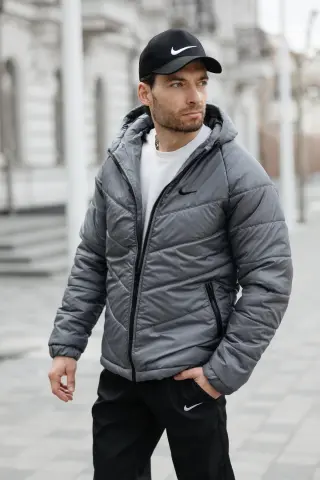
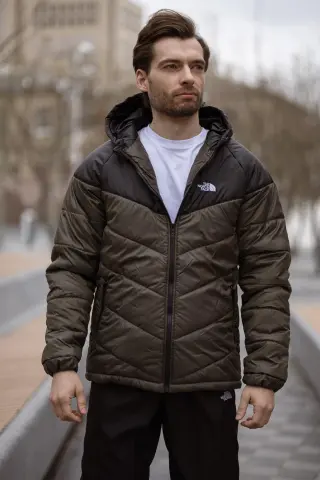
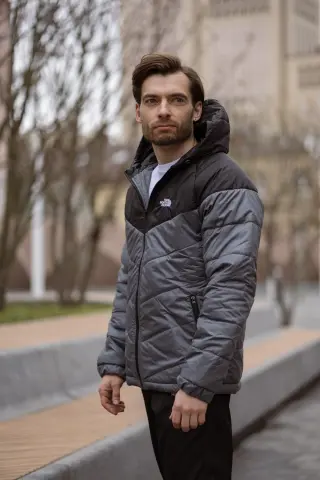
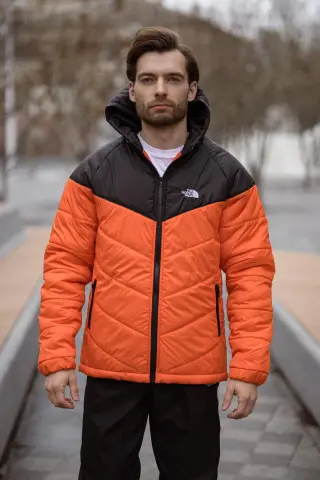
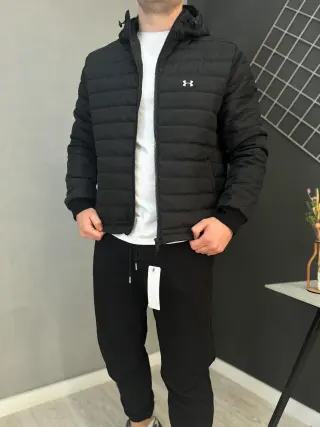
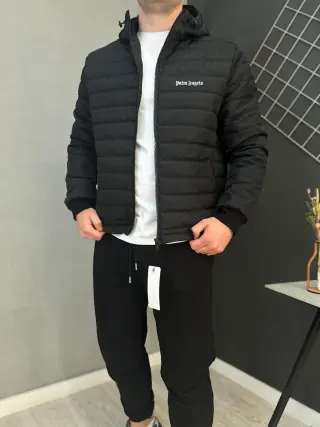
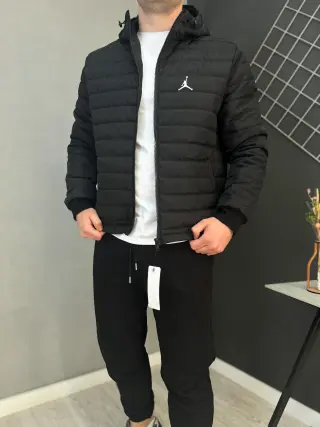
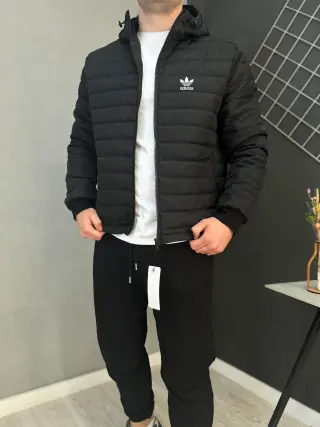
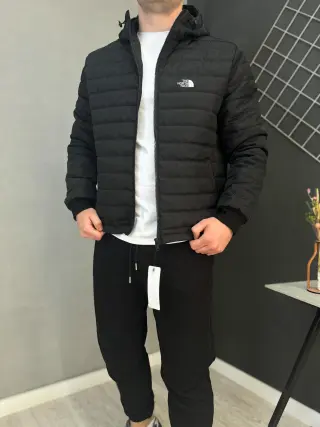
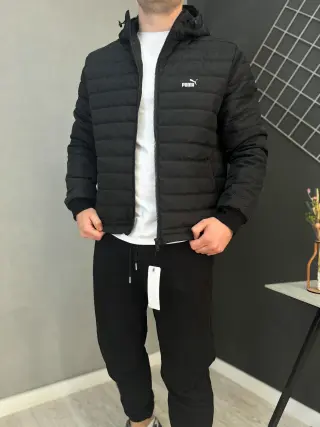
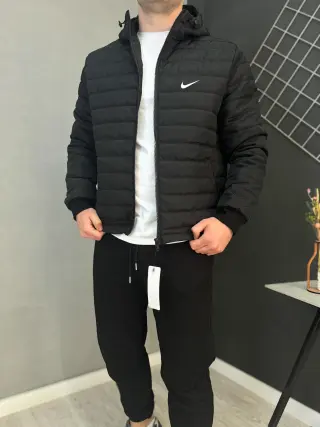
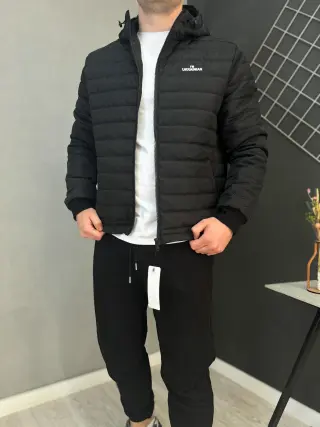
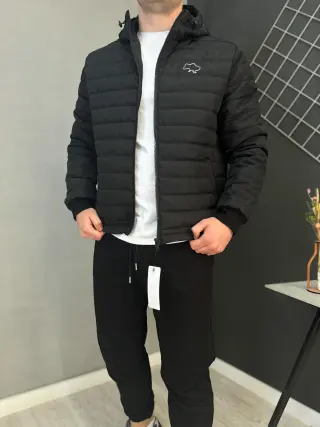
The quilting pattern changes both the look and the feel. Narrow horizontal lines give an even silhouette, and the jacket does not look puffed up. Wide sections stand out more and add volume across the chest and shoulders, so men with a solid build should try them on carefully. Chevron quilting, where the lines meet at an angle, breaks up straight lines and looks sportier. Stitched seams have a weak spot too: in cold wind, heat escapes through them, so a warm layer underneath helps in bad weather. If you want even more volume, compare this jacket with a puffer.
Fill and Weather
Silicone fill is springy, does not mind moisture and recovers its shape quickly after washing. A thin layer suits spring and mild autumn, and a denser one handles cooler mornings. Down is warmer for the same weight, so a jacket with down suits cold autumn, when silicone is no longer enough and a winter down coat is still too much. On the other hand, down copes worse with damp and takes longer to dry. If you travel a lot by public transport, do not chase the warmest style: on board it only gets in the way.
Common Mistakes When Choosing
Most often the jacket is bought too snug, and then a sweatshirt does not fit under it. Try it on over the layer you will really wear and raise your arms: the cuffs should not leave your wrists bare, and the hem should not lift. If the hood is fixed, check that it lies flat on the back and does not press on the neck. A hood that zips off gives more freedom in dry weather. Color affects practicality too: dust and salt marks show clearly on a black jacket, while on khaki they almost disappear.
Washing and Water Repellency
Close all the zips and wash the jacket on a delicate cycle in cool water with liquid detergent. Powder leaves streaks on a smooth surface, and softener washes out the finish, so skip it. Dry the jacket laid out flat, shaking it now and then so the fill does not clump. When water stops beading on the fabric, renew the finish with a spray.
Frequently Asked Questions
Does a quilted shell jacket get wet through?
Not in drizzle or a short shower, but in a long downpour moisture gets through the seams and the closure. A rubberized zip holds it back longer than a regular one.
Does the fabric rustle when you walk?
A little, especially when it is new and smooth. Matte fabrics sound quieter, and after a few weeks of wear the sound becomes less noticeable.
What weather is this jacket made for?
There are no exact limits, because a lot depends on the wind and the layer underneath. Silicone is comfortable in cool weather, and down handles cold autumn too, especially with a sweater.